insight

Hong Woo-tae, the representative of DaLock
In the previous article, we highlighted the potential for self-storage to establish itself as core infrastructure for smart cities. In particular, we examined Darak's operating strategy as an innovative case that redefines the value of space through the smart use of idle urban space and an AIoT-based operating system. This time, we will look at Japan's self-storage market, which is the most similar to us geographically and culturally, and explore the direction of development for the Korean market and Darak's competitive strengths.
Japan, Asia's Largest Self-Storage Market
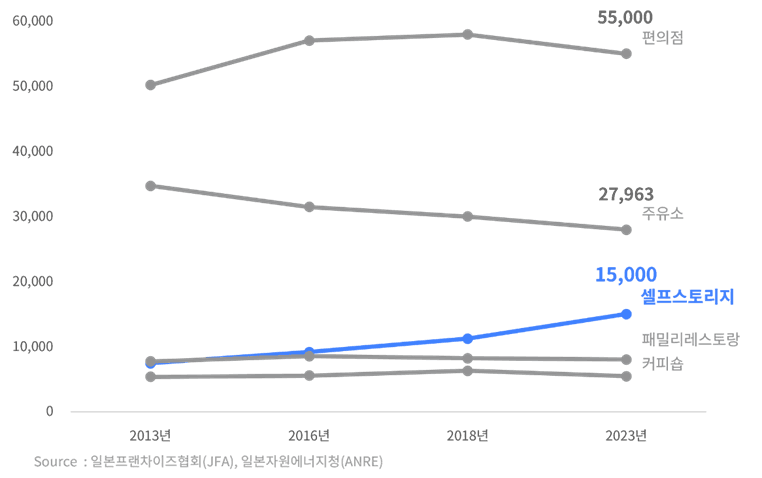
In Japan, self-storage began to grow in earnest in the 1990s, and it is now established as the largest self-storage market in Asia. The number of facilities currently in operation is about 15,000, making it the third-largest category of facilities after convenience stores and gas stations, which are representative franchise businesses. That is how self-storage has already become a familiar everyday amenity in Japan.
<Number of Major Self-Storage Sites in Japan / Source: Japan Franchise Association (JFA)>
According to global market research firm Grand View Research, the Japanese self-storage market will reach $2.1 billion (about KRW 3 trillion) as of 2024, forming a massive market. Even more remarkably, it is expected to grow steadily by an average of 6.5% per year and expand to $3 billion (about KRW 4.3 trillion) by 2030.
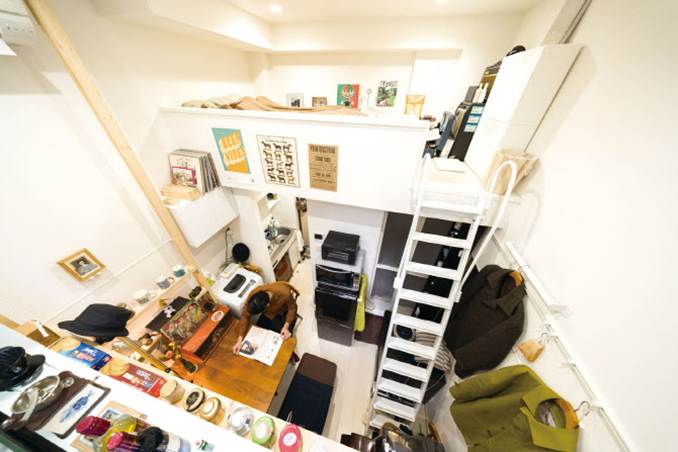
There are several reasons why self-storage has grown this much in Japan. The most fundamental reason is the small size of housing. In particular, in major metropolitan areas such as Tokyo and Osaka, where population density is high, the share of single-person households living in ultra-compact homes of about 1.5 pyeong is increasing.
According to Japan's Ministry of Land, Infrastructure, Transport and Tourism, the average living space in the Tokyo metropolitan area has decreased by about 7 square meters (about 2 pyeong) compared with 20 years ago. Another factor is that rising material and labor costs have made it difficult to build new suburban mansions, which are a typical housing type in Japan.
<Ultra-compact housing in Tokyo, Japan / Source: SPILYTUS>
Japan's unique consumer behavior and collecting/hobby culture have also had a major impact on the self-storage market. Thanks to Japan's distinctive fan culture, represented by "otaku," a culture of collecting figures and various goods has become mainstream. It is also widely used to store equipment needed for a variety of hobbies and leisure activities.
In fact, in a customer survey by Quraz, "to store increased hobby collectibles" ranked first as the reason for using self-storage, at 40%.
Finally, the impact of aging and the increase in single-person households is also significant. As Japan enters a super-aged society, demand for "sorting belongings" has increased as elderly parents pass items on to their children or downsize their homes. As the proportion of single-person households living alone has increased, especially in major cities, demand for self-storage to efficiently use limited living space has naturally grown.
Vending Machines, Parking Lots, and Self-Storage
<Status of Self-Storage Facilities Across Japan and in the Tokyo Area / Source: locationsmart>
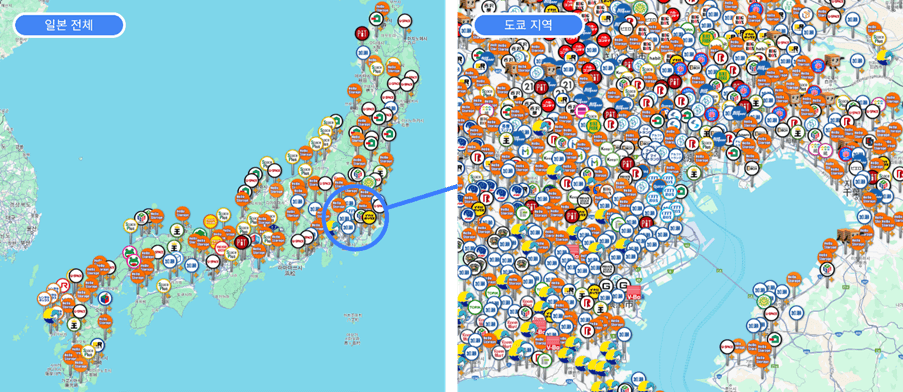
When traveling in Japan, the facilities you see much more often than in Korea are vending machines and parking lots. Especially when walking through alleyways rather than main roads, you often come across these facilities. The same is true for self-storage. If you walk through major Japanese cities, including Tokyo and Osaka, it is by no means unusual to encounter one or two self-storage facilities within a single block.
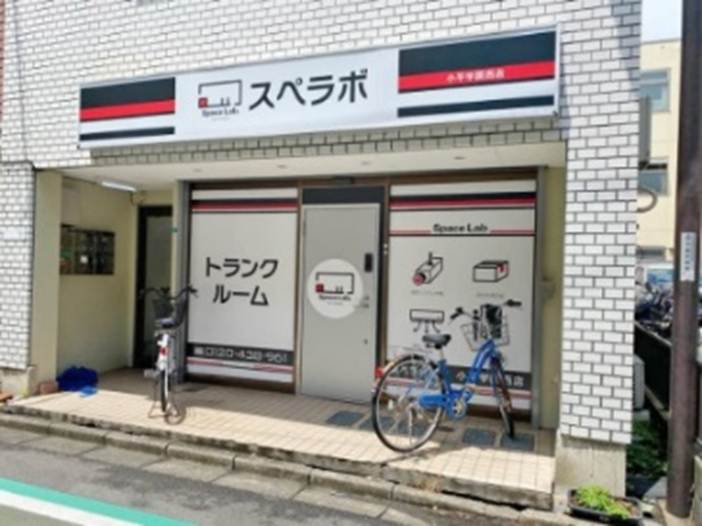
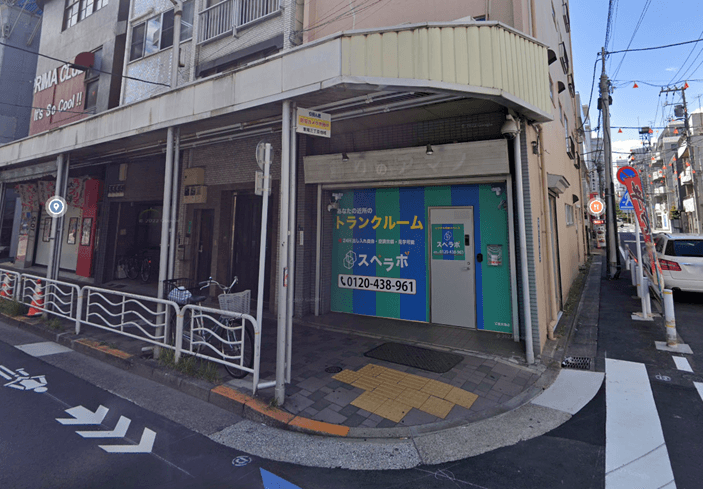
Some have eye-catching signs, but most are quietly tucked away out of sight. They exist behind apartment complexes, in narrow alleyways, or as a converted floor of a commercial building. Because they are located in the middle of residential neighborhoods, you can often see people carrying items on bicycles or carts rather than in cars.
<Self-storage densely located in residential areas / Source: Google Maps>
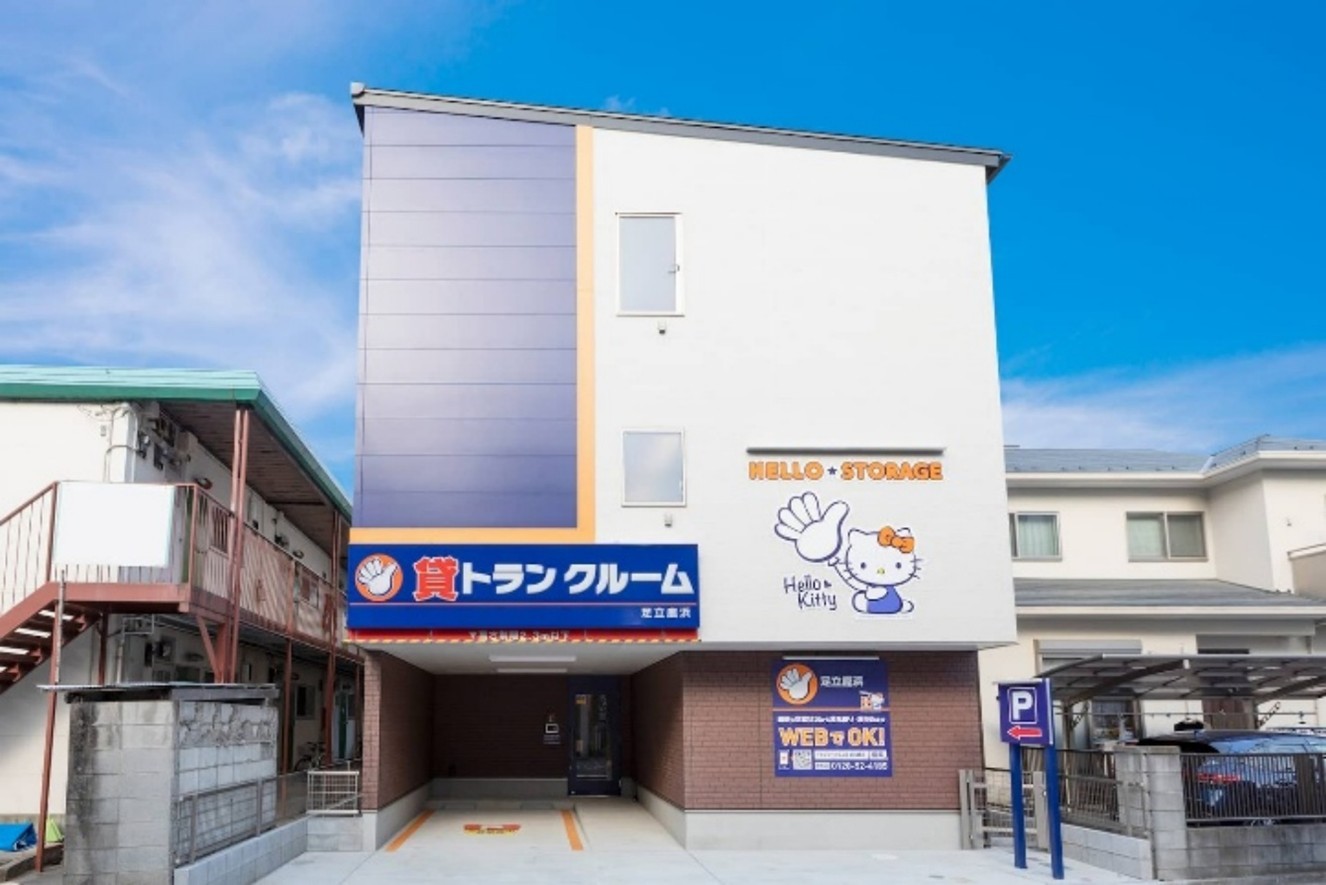
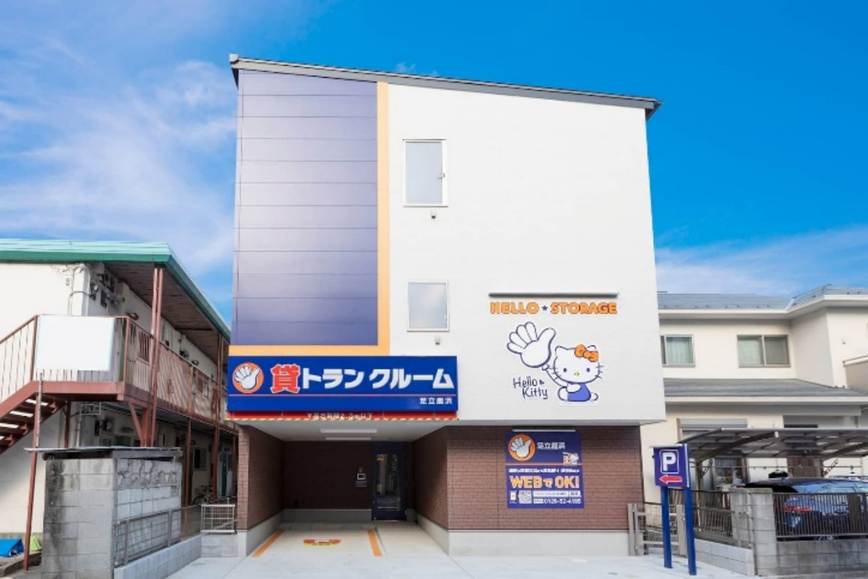
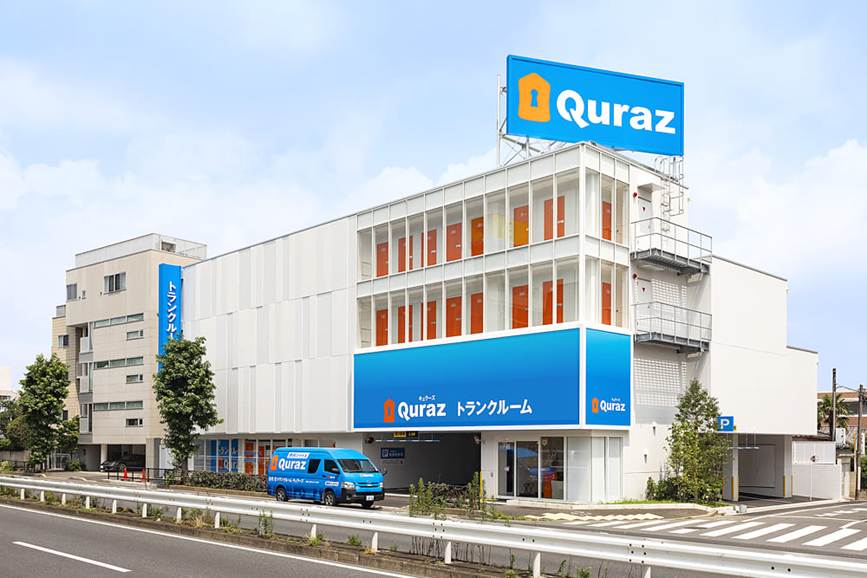
Some operators, such as Quraz, also provide self-storage services by using entire buildings. They attract attention with prominent building designs and signage on main roads. Because they are farther from residential areas than smaller facilities, they necessarily secure parking spaces so that customers can use vehicles. They are mainly used to store bulky hobby items or appliances.
<Building-scale Japanese self-storage / Source: Hello Storage, Quraz>
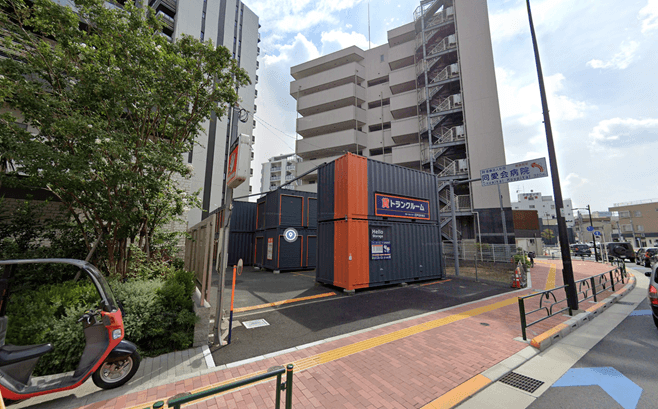
There are also many container-style storage facilities, which are not very common in Korea. You can even see outdoor containers placed outside buildings like parking lots in the middle of residential neighborhoods. Some places maximize space efficiency by stacking containers two stories high. These facilities mainly store items that can be kept outdoors without issue, such as bicycles and motorcycles.
<Container-based outdoor storage / Source: Google Maps>
In this way, Japanese self-storage has become less of a "commercial facility" and more of a "neighborhood-based service." It feels similar to laundromats or self-service laundry rooms in Korea. In other words, it has become a daily-life infrastructure that you can stop by anytime.
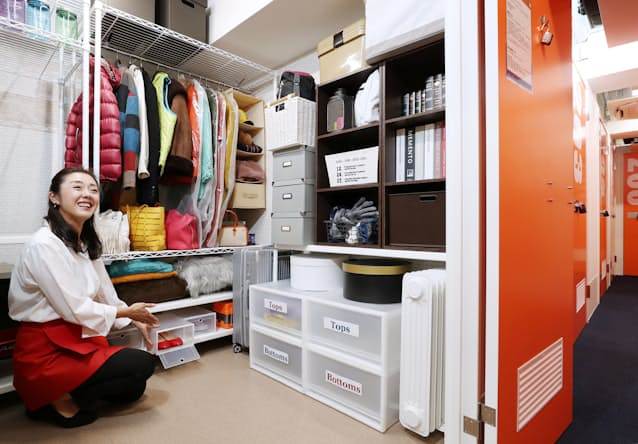
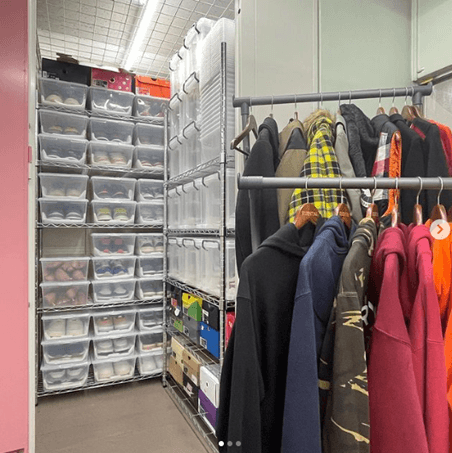
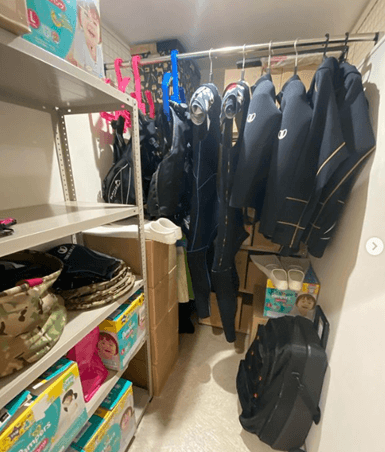
How do Japanese people, who have used self-storage for more than 30 years, make use of it? Looking at customer reviews, you can see that, true to a people known for being well organized, they manage their units almost like another home by using various shelves, tools, and boxes. Darak provides services that let customers add the necessary tools or items so they can maximize the usability of their units.
<Examples of self-storage use in Japan / Source: self-storage service reviews>
Beyond Japan: Toward Asia's Leading Self-Storage Market
It is analyzed that there is about a 10-year gap between Korea and Japan in terms of social structure and consumer culture. This time lag also appears in similar patterns within the self-storage industry.
Japan's self-storage market is currently evolving into various forms, including real estate assetization, residential expansion services, and franchise business models. In some housing contracts, self-storage usage rights are included as a basic option, to the point where it is recognized as a common service. This shows that self-storage is recognized not merely as a storage space, but as an extended residential infrastructure.
In Korea, social interest in and demand for self-storage have been rapidly increasing recently, and the market is growing quickly through innovative approaches centered on Darak, Korea's No. 1 brand. However, Korea's key distinction is that it is not simply following Japan's development path, but is preemptively implementing a technology-driven, future-oriented self-storage paradigm that even the Japanese market has not yet reached. This will be an important capability as Korea moves toward becoming Asia's largest self-storage market.
We are still at the starting point. But as the way we live changes, cities change, and the form of housing changes, "Darak" will become another part of everyday infrastructure.


