insight

Mini Storage DaLock
How Big Will the Korean Self-Storage Market Grow?
Hello, we are 'daLock', the self-storage service.
"I feel like self-storage is everywhere these days, but is it really a rising market?"
We get this question quite often. Today, we'd like to answer you with numbers.
Emerging in 2018, It Has Doubled Annually
Self-storage in Korea first emerged in its early form around 2018. Since then, it has nearly doubled in size every year, with about 1,000 facilities currently operating nationwide.
In just 7 years, a non-existent market has grown to 1,000 facilities. Looking at Japan, we can see Korea's future in 10 years.
The closest market Korea looks at to benchmark self-storage is Japan.
Japan currently has 15,000 self-storage facilities, with a market size well exceeding 1 trillion won. It has become a lifestyle infrastructure, so much so that there are more self-storage facilities than coffee shops or family restaurants. Walking through downtown Tokyo, it is easy to spot people pushing carts in and out of storage units.
Korea currently has 1,000. Japan has 15,000. Korea is growing in the same direction, only faster.
Why is this market growing right now?
From the demand perspective, the reason is clear.
Single-person households are rapidly increasing. For those living in a studio apartment, just taking out one winter duvet makes the room feel cramped. Camping, golf, figurines, shoes for resale – as hobbies diversify, so does the amount of stuff. A structure where homes are getting smaller while belongings are increasing; self-storage is filling that gap.
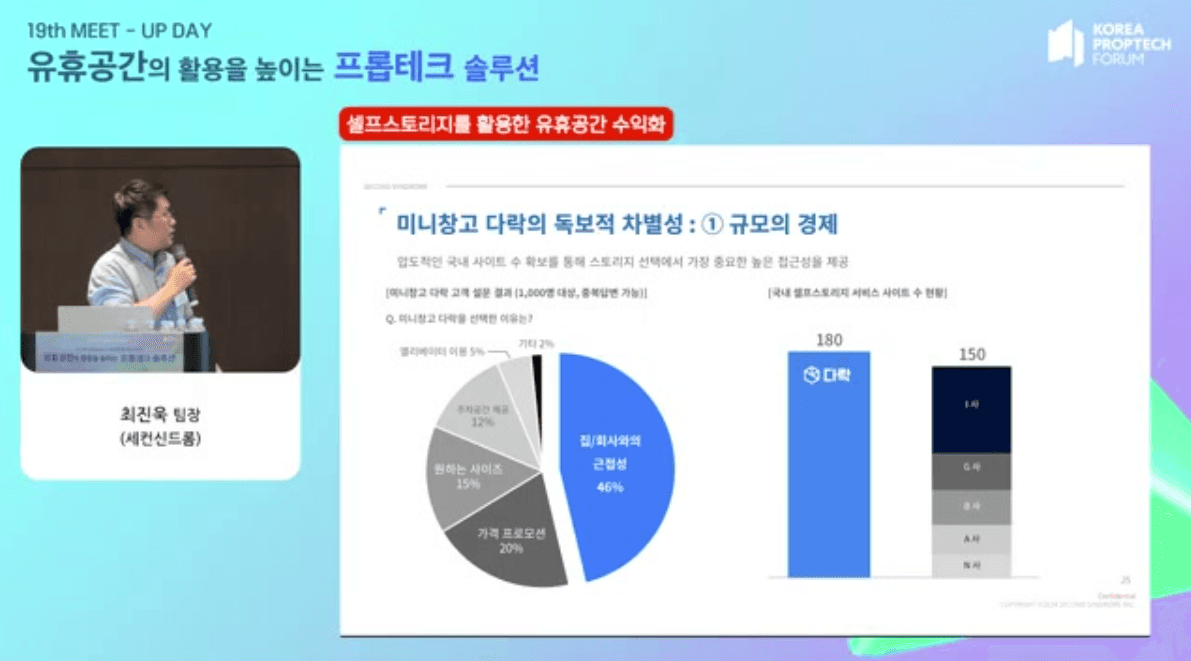
In the daLock user survey, the number one reason for using the service is simple: "Not enough space at home."
From the supply perspective, the conditions also align perfectly.
Self-storage is not picky about location. It doesn't have to be on a main road, and it can be in a basement. This is because it is a business where customers find locations by searching on apps, without relying on foot traffic.
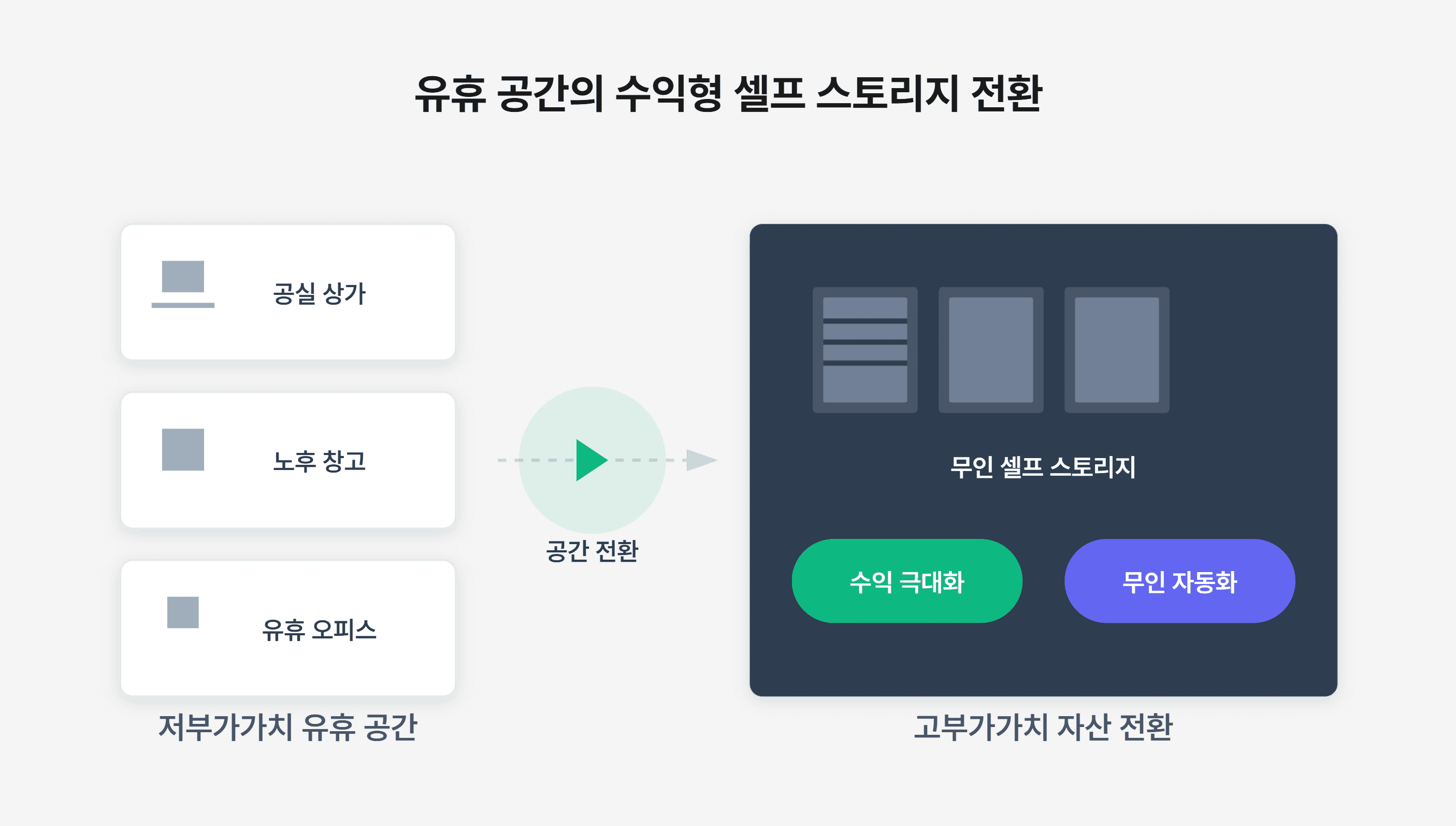
Basements of commercial buildings with high vacancy rates, old offices, underutilized CGV theater spaces, bus terminal waiting rooms, and even semi-basement homes – these are actual spaces where daLock currently operates. Since these are unmanned storage facilities, even old buildings can be remodeled and operated.
The more serious the vacancy problem, the more potential spots open up for self-storage.
The National Pension Service and the Ministry of Land, Infrastructure and Transport are also taking notice
One indicator of a market’s maturity is the interest from institutional sectors.
The National Pension Service (NPS) recently specified a condition in its outsourced investment guidelines to invest 20% to 30% in 'New Economic Sectors,' which includes self-storage.
The Ministry of Land, Infrastructure and Transport has issued a legislative notice to establish a new building use category called 'Shared Storage Facility' for self-storage, which is scheduled to be created within this year.
The fact that investment institutions are adding it to their portfolios and the government is organizing regulations around it is a signal that this market is transitioning from a 'rising sector' to a 'stable sector.'
Most people still haven't used it yet
daLock currently has 100,000 members. This is about 0.7% of the population of Seoul. Nationwide, the percentage is even lower.
These numbers mean two things: the market is still in its early stages, and there is enormous room for growth ahead.
It was the case in Japan, and it was the case in the US. At first it's unfamiliar, and then at some point, it becomes an infrastructure you can't live without.
The Korean self-storage market is now nearing that inflection point.
If you are curious about starting a self-storage business or utilizing vacant space, feel free to ask us through the consultation request below. We will provide you with a detailed answer.


