insight

Hong Woo-tae, the representative of DaLock
In the previous article, we looked at unit storage, which has recently been gaining attention as an essential option in apartment sales markets. We explained that although it is the only means of expanding living space, it carries a risk of safety accidents, so a professional operation and management institution with expertise and technical capability, like Mini Storage Darak, is needed. In this article, we will look at what role self-storage can play in solving the vacancy problem in knowledge industry centers, which has recently emerged as a social issue.
The Vacancy Problem in Knowledge Industry Centers Emerging as a Social Issue
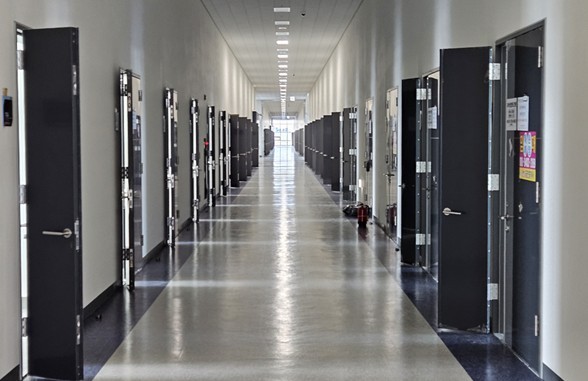
< Knowledge industry centers with serious vacancy problems / Source: Kyunghyang Shinmun >
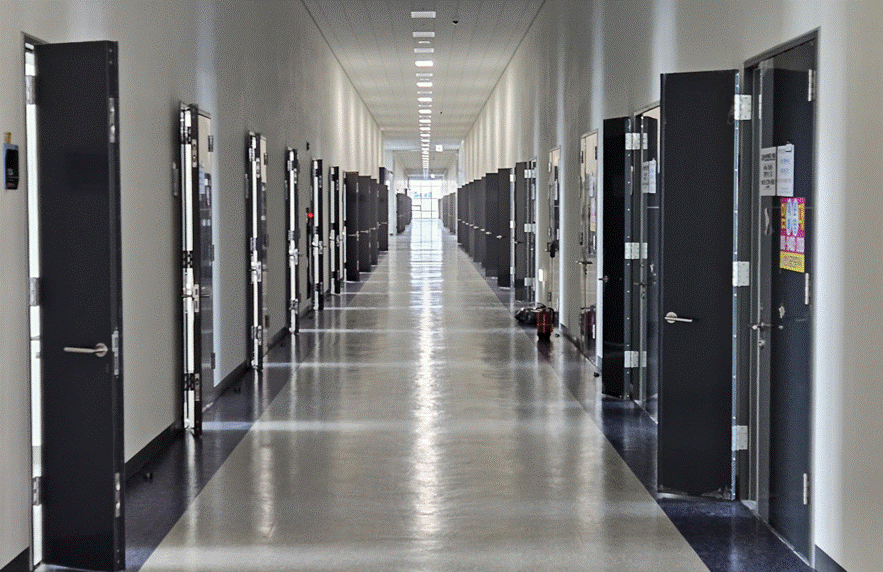
Knowledge industry centers are buildings formerly called "apartment-style factories," referring to workspaces on three floors or more where small and venture businesses or startups in knowledge industries can move in. They spread rapidly from the 2010s, when Korea's industry was shifting from manufacturing to knowledge industries such as IT and R&D, helped by the government's active support. According to the Korea Industrial Complex Corporation, there are about 1,500 knowledge industry centers nationwide as of May this year, and about 73% of them are concentrated in Seoul and Gyeonggi Province.
<Number of approvals for new knowledge industry centers nationwide (2005~2020) / Source: Korea Industrial Complex Corporation >
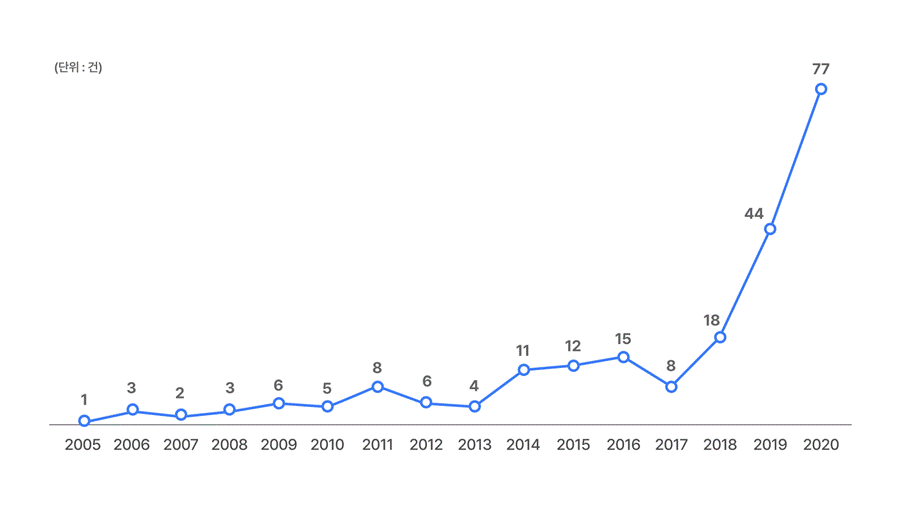
Separate from their original purpose, knowledge industry centers drew attention as income-generating real estate. From the late 2010s, when low interest rates and rising housing prices continued, housing regulations were strengthened, and real estate investors began to take interest in knowledge industry centers, which were relatively less regulated. They could avoid various real estate regulations such as resale restrictions, and loans of up to 80% of the sale price were possible. In addition, unlike ordinary factories, they were not subject to the "factory total quota system," so they literally sprang up like mushrooms all over the country.
< News articles dealing with vacancies in knowledge industry centers / Source: JTBC >
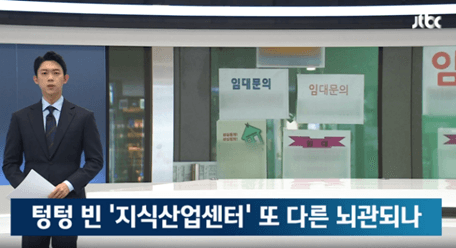
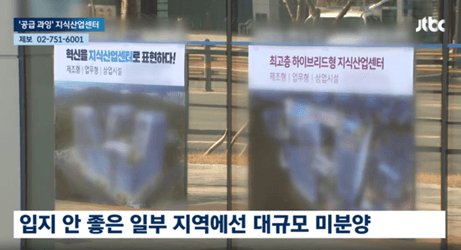
However, recently the vacancy problem in knowledge industry centers has emerged as a serious social issue. In most areas outside popular parts of the Seoul metropolitan area, vacancy rates exceed 50%, and in some oversupplied areas, vacancy rates are reportedly as high as 90%. Until the late 2010s, when startup formation and investment were active, knowledge industry centers were seen as attractive real estate investment opportunities.
But from the mid-2020s, rising interest rates and an economic downturn caused demand from tenants to drop sharply, while new supply did not decrease, ultimately leading to vacancy problems caused by oversupply.
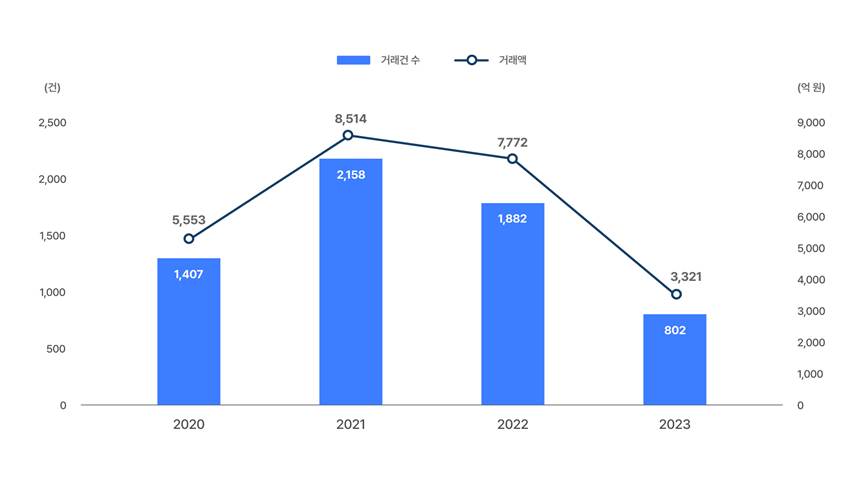
As a result, a cold wind is also blowing through the sales market for knowledge industry centers. The number of transactions for knowledge industry centers, which peaked at 2,158 in 2021, fell by nearly 63% to 802 last year, and transaction volume also dropped sharply from KRW 851.4 billion to KRW 332.1 billion.
<Nationwide transaction volume for knowledge industry centers (2020~2023) / Source: Real Estate Planet>
The bigger problem is that the damage caused by vacancies is being passed on directly to individual investors. With long-term vacancies and rising interest rates combined, more and more owners are being forced to put properties up for auction, unable to bear the burden of loan interest.
According to Giji Auction, a company specializing in auction data, 688 knowledge industry centers were listed for auction last year, up 70% from the previous year, and only about one in three found a new owner. Concerns are also being raised in the financial sector about deteriorating asset quality due to rising delinquency rates on mortgage loans.
The government has recognized the seriousness of the issue and introduced measures to expand the types of businesses that can move in and to prevent indiscriminate supply in order to solve the vacancy problem, but the real estate industry points out that there are limits to seeing this as a fundamental solution.
How Self-Storage Is Being Used in Hong Kong’s Industrial Buildings
To find a solution, let’s look at overseas examples. Similar to Korea, Hong Kong has Industrial Buildings similar to Korea’s knowledge industry centers, despite its high population density in a small area. These buildings are multi-story industrial buildings designed for manufacturing-based industrial activity in the 1970s and 1980s, and they have played an important role in Hong Kong’s economic development and the efficient use of urban space.
However, as Hong Kong’s economy also shifted from manufacturing to finance, IT, and services, the way these buildings are used changed as well. They may be used as offices for startups or studios for artists, but the most representative and exemplary conversion case is their use as self-storage.
For example, there is a case in which asset manager Blackstone and self-storage company Storefriendly jointly acquired an Industrial Building in Hong Kong and converted it into a self-storage facility. They are transforming underused factories in the city center into self-storage spaces, increasing profitability. In the process, they naturally met residents’ demand for self-storage while also easing landlords’ concerns, and as the functions of downtown buildings were reorganized, they created desirable results that also contributed to urban regeneration.
< Hong Kong’s Novel Industrial Building converted into a self-storage facility / Source: Storefriendly>
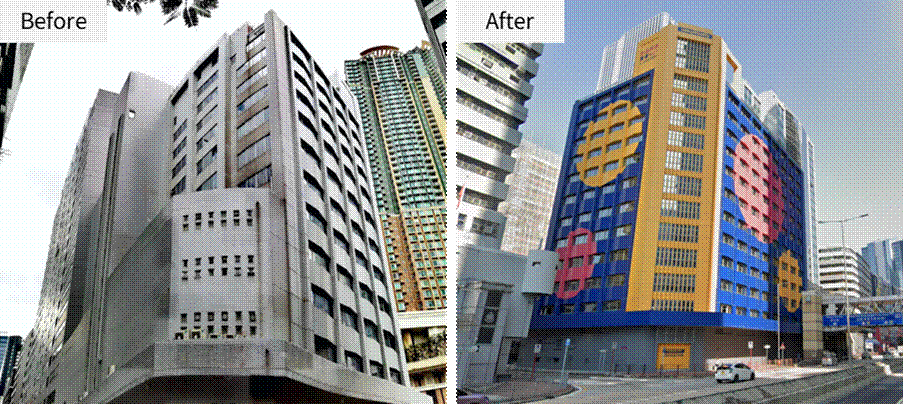
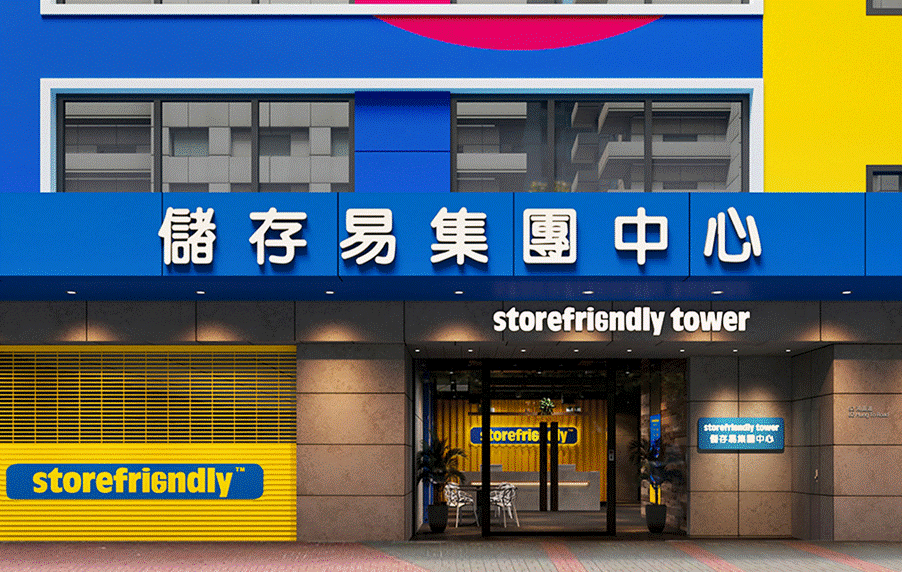
The new use of urban buildings solved Hong Kong’s chronic space shortage problem while enabling new businesses and generating investment returns for real estate developers and investors.
Self-Storage and Knowledge Industry Centers: A Win-Win Opportunity
As can be seen from Hong Kong’s case, Korea’s apartment-style factories, that is, knowledge industry centers, are also very suitable for conversion into self-storage. Let’s examine this from three perspectives: location, convenience, and profitability.
First, knowledge industry centers have location conditions suitable for operating self-storage facilities. Since they are facilities for business, they are located in places with convenient access to public transportation and vehicles, taking tenants’ commuting needs into account, so accessibility is good. Also, because they are large high-rise buildings located on one side of a road in most cases, even first-time customers can easily find them.
Next, they are well equipped with the conditions needed for customers to conveniently store and retrieve items. Since they were designed with office space in mind, they typically have high ceilings and large floor areas, as well as sufficient parking space and elevators. Vehicle access is possible on each floor, making it convenient to move items from a vehicle to the unit over a short distance.
Lastly, using a knowledge industry center as self-storage can deliver stable and high profitability. Compared with nearby commercial districts, knowledge industry centers have relatively low rent and maintenance fees, so expected returns tend to be lower. In addition, because the building itself is well equipped with heating and cooling systems and security facilities, investment costs can be reduced. On the other hand, because there are many tenants in the building, securing customer demand is relatively easy. Therefore, although input costs are lower than those of ordinary retail properties, profitability relative to expected returns can be higher.
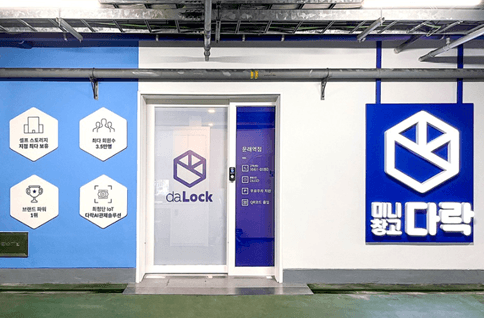
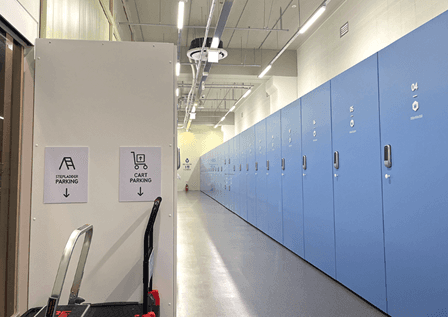
In fact, when looking at Mini Storage Darak branches inside knowledge industry centers, occupancy rates are rising at a faster pace than in ordinary commercial buildings, and the principal recovery period is also relatively short. Because these advantages are so clear, inquiries from knowledge industry center owners looking to use Darak to solve vacancy problems have also been steadily increasing recently.
< Mini Storage Darak branches inside knowledge industry centers (Mullae Station Branch, Bucheon Okgil Branch) / Source: Mini Storage Darak website >
The Need for Regulatory Improvements to Expand the Use of Self-Storage
However, when converting knowledge industry centers into self-storage, regulatory issues must be considered. Unlike ordinary buildings subject to the Building Act, knowledge industry centers are regulated under the Act on the Promotion of Industrial Cluster and Factory Establishment, etc. (hereinafter the “Industrial Cluster Act”). This law governs industrial sites and industrial complexes, including knowledge industry centers, and sets out the requirements for establishing knowledge industry centers as well as the types of businesses that can move in.
The uses of knowledge industry centers are broadly divided into factory facilities and support facilities. Unlike support facilities, where most business types may move in, the Industrial Cluster Act limits the industries that can occupy factory facilities to manufacturing, knowledge-based industries, information and communications industries, and facilities for operating businesses otherwise designated by presidential decree. Only self-storage companies that have been recognized for innovation, such as Mini Storage Darak, which was the first in Korea to receive ICT regulatory sandbox designation, are exceptionally allowed to move into knowledge industry centers.
I understand that the government is pushing to expand the types of businesses that can move into knowledge industry centers in order to solve the vacancy problem. In this process, it would be desirable to include the self-storage industry, which is being discussed in Korea’s real estate sector as a reliable alternative that can solve the current vacancy problem.
In this article, we discussed how attractive self-storage can be as a solution to the vacancy problem in knowledge industry centers. In the next article, we will introduce self-storage businesses that utilize real estate development, which are widely used in advanced countries such as the United States and Japan, and how they can be applied domestically.


