insight

Hong Woo-tae, the representative of DaLock
In the previous article, we looked at cases of overseas self-storage companies and saw that even in mature markets, differentiation is possible through customized strategies. This time, focusing on the world's No. 1 self-storage company, 'Public Storage,' we will examine the self-storage industry from the perspective of Economies of Scale. We will look at how economies of scale work in the self-storage industry and what competitive advantages can be gained through them, using Public Storage's growth strategy and operational efficiency efforts as examples.
Self-Storage and Economies of Scale
<U.S. self-storage market share (by area) / Source: Extra Space Storage>
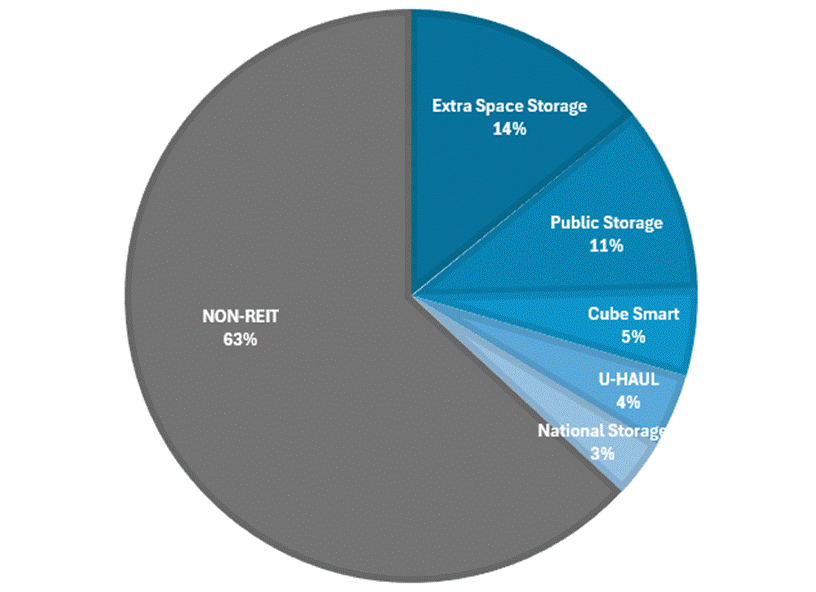
Self-storage is one of the 대표적인 industries where economies of scale have a strong effect. In self-storage, economies of scale appear as cost efficiency improves as the number of facilities operated increases. The reason economies of scale are effective in the self-storage industry is that facility investment costs are relatively low compared with other real estate sectors, making aggressive site expansion possible. In the U.S., self-storage construction costs are around $40 per square foot, only about 30% of the $300 required for office space.
Looking at the U.S. self-storage market, the most mature in the world, makes it even clearer how important economies of scale are. There are currently about 52,000 self-storage facilities operating in the U.S., and since 2012 the market has grown rapidly at an average annual rate of 8%, forming a market worth $39.5 billion (about KRW 52 trillion). According to Mordor Intelligence, a global market research firm, the U.S. self-storage market is projected to grow to $51.2 billion (about KRW 74 trillion) by 2030.
What is notable is that despite forming such a massive market, more than 60% of all facilities are operated by individual business owners or small operators. This reflects the nature of the self-storage industry, which requires physical facilities in each local area and involves significant initial capital expenditure (CAPEX) for every facility.
By contrast, in the domestic market, Darak has secured an overwhelming market share that exceeds the combined number of facilities operated by the No. 2 through No. 5 players. This is because Darak overcame structural limitations not by focusing only on expanding physical facilities, but by providing automated operating solutions as well. Recently in the U.S. as well, fierce competition has been unfolding, centered on large operators listed as REITs, to lead the market by realizing economies of scale through such innovations.
Public Storage's Economies of Scale Strategy
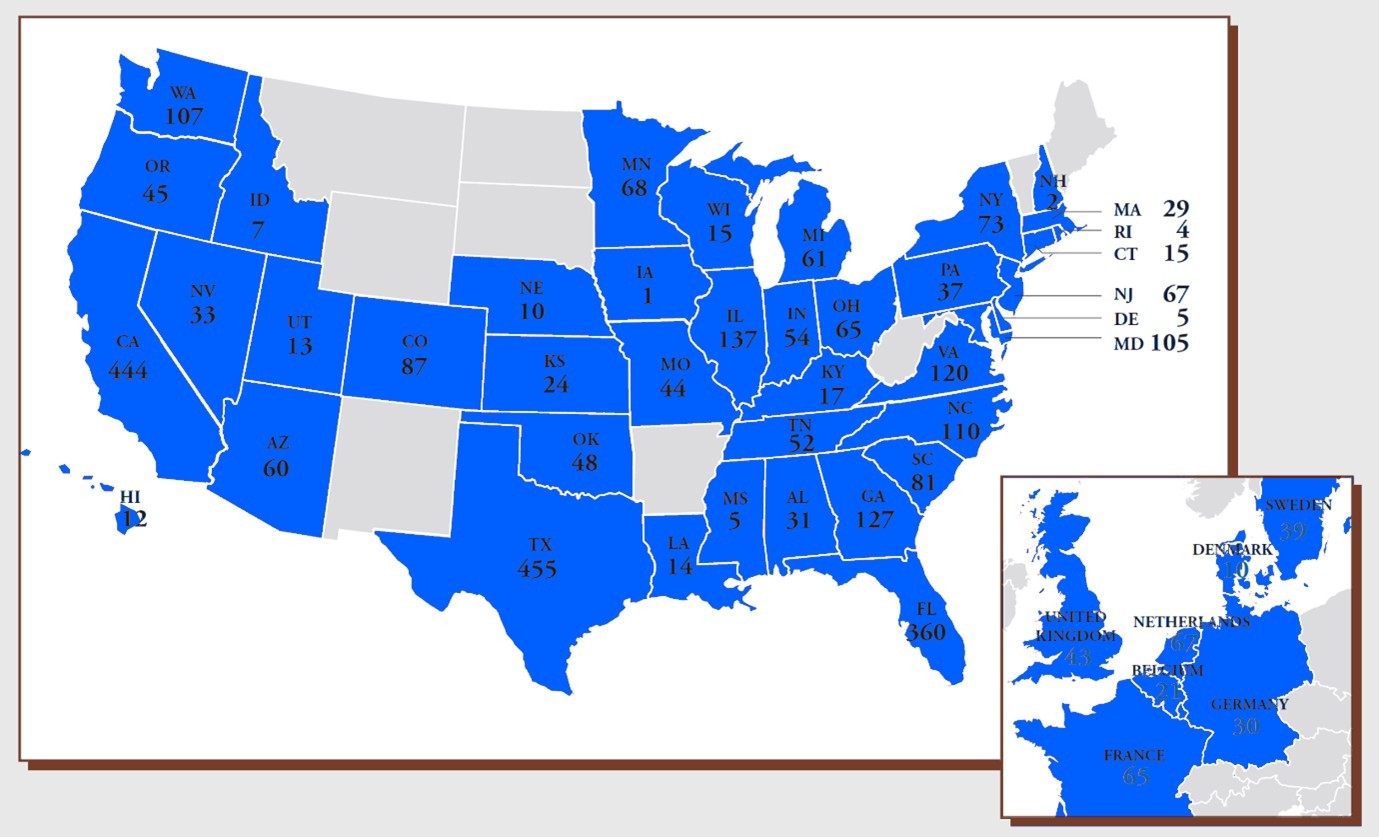
The company that first successfully realized economies of scale in the U.S. is Public Storage. With more than 3,400 facilities across the country and 241 million square feet (about 6.7 million pyeong) of rentable area, Public Storage has established itself as a global leader with a market capitalization of $58 billion (about KRW 81 trillion). Remarkable profitability metrics such as a Same Store NOI margin of 78% and an operating margin above 50% clearly show the advantages that a scaled business can enjoy.
<Public Storage site distribution / Source: Public Storage>
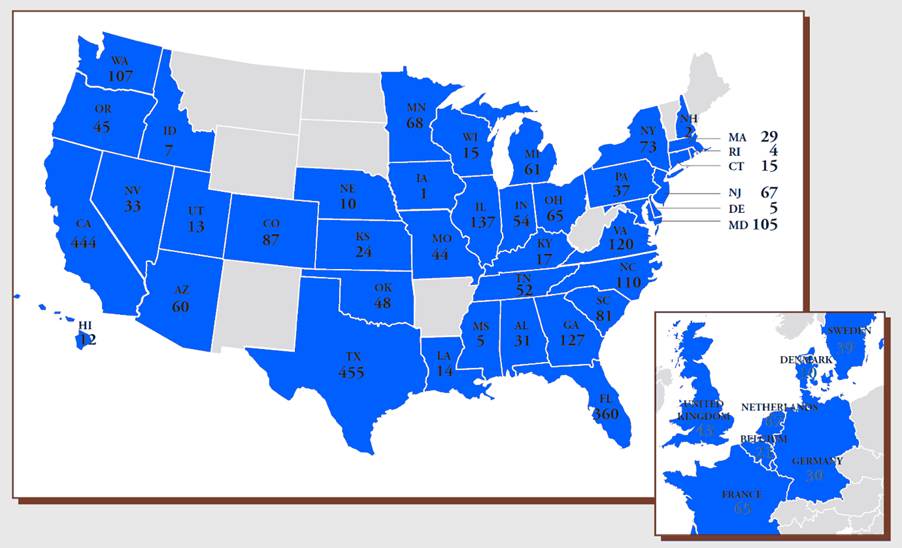
To continuously achieve superior market share, Public Storage has pursued three core strategies based on economies of scale.
First is an aggressive mergers and acquisitions (M&A) strategy targeting small and mid-sized storage companies. A representative example is the 2021 acquisition of Simply Self Storage for $2.2 billion, instantly securing 90,000 customers and 127 facilities. This was more than a simple expansion in scale; it became an opportunity to rapidly expand its influence in the market.
In response to Public Storage's aggressive M&A strategy, competitor Extra Space Storage made an even bolder move. In July 2023, it acquired Life Storage for an unprecedented $12.85 billion, completing the industry's largest M&A deal.
Through this, it added more than 1,200 facilities, securing a total of more than 3,800 facilities and 283 million square feet of rentable area, and built the industry's largest portfolio. This is a clear example showing that economies of scale are the key factor determining success in this industry.
<U.S. self-storage transactions / Source: National Report on 2024 Self-Storage Investment>
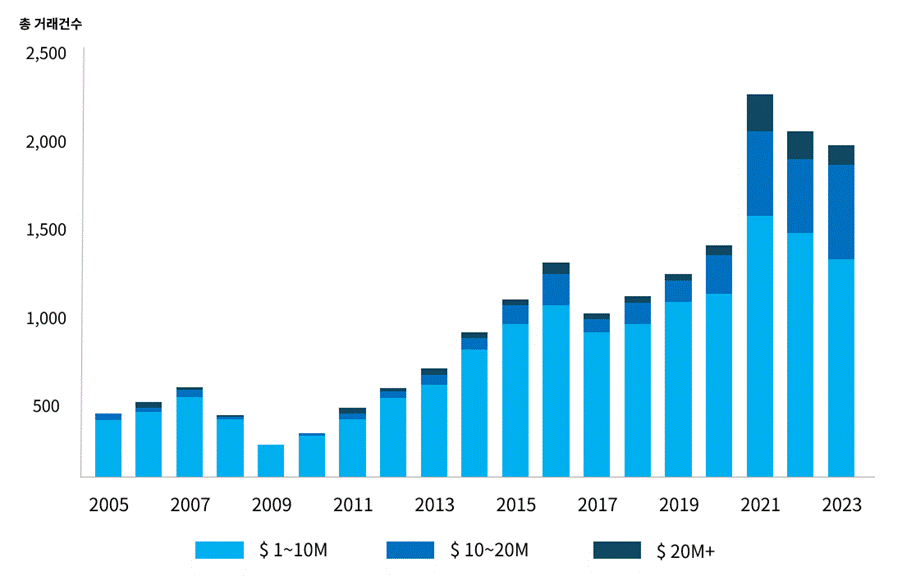
A similar trend is also appearing in the domestic market. Beginning with the 2022 acquisition of the storage facilities operated by Megabox Central's Storage Welfare Division, Darak has successfully integrated numerous privately operated storage facilities. Facilities that previously struggled due to lack of profitability are achieving high occupancy through Darak's automation technology and operating platform. As the domestic self-storage market grows, these cases are expected to continue increasing.
Second is strategic real estate development. Since 2019, Public Storage has invested $1.2 billion to expand its portfolio by 36%. In particular, by acquiring inexpensive land on the outskirts of cities and developing large-scale facilities there, it minimizes construction costs while securing high-return assets. This is a strategy that leverages the advantage that self-storage construction costs are significantly lower than those of other real estate types. By acquiring undervalued land and then developing it into self-storage facilities, the company can earn operating income as well as capital gains from rising property values.
<Operating staff per facility by self-storage company / Source: each company's disclosures>
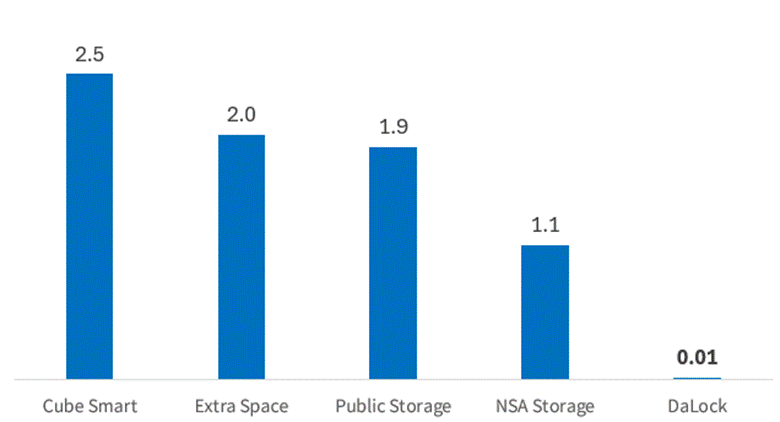
The effect of Public Storage's realization of economies of scale is most clearly demonstrated in terms of operational efficiency. It operates with an average of 1.9 employees per facility, showing a high level of efficiency compared with the U.S. average of 3.5. Labor costs account for only 11% of revenue, while marketing costs at 2.5% and purchasing costs at 4.6% are also significantly below industry averages.
This efficiency tends to be amplified even further as scale grows. Darak has secured an even higher level of operational efficiency. By adopting a fully unmanned automation solution, it manages 158 branches nationwide with just two headquarters employees. That works out to an average of only 0.01 employees per branch, boasting operational efficiency nearly 200 times greater than Public Storage.
It also has a strong advantage in smooth capital raising. As the only company to hold top credit ratings of Moody's A2 and S&P A, it raised $9.2 billion in debt at a low interest rate of 3.1%. This financing advantage is creating a virtuous cycle that leads to continued growth investment.
Efforts to Realize Economies of Scale
<Public Storage and Darak's 'Dynamic Pricing' / Source: each company's website>
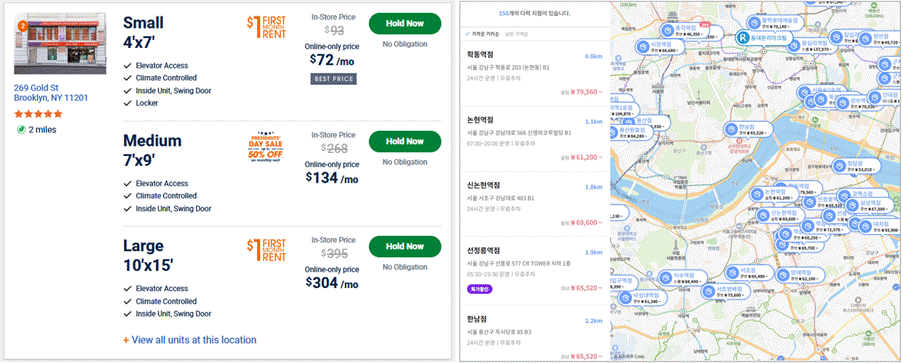
A key strategy Public Storage uses to maximize the benefits of economies of scale is revenue maximization through data-based pricing. Based on data gathered from operating multiple sites, it adjusts fees by reflecting demand and supply, occupancy, and local characteristics.
Darak has taken this strategy even further by applying a 'Dynamic Pricing' system in which AI analyzes real-time supply and demand data to set the optimal price. Through this system, it minimizes vacancy rates at each site and maximizes revenue. In fact, Darak's revenue per square foot is about 2.5 to 3 times higher than that of other companies.
<Public Storage vs Darak digital operations technology / Source: each company's website>
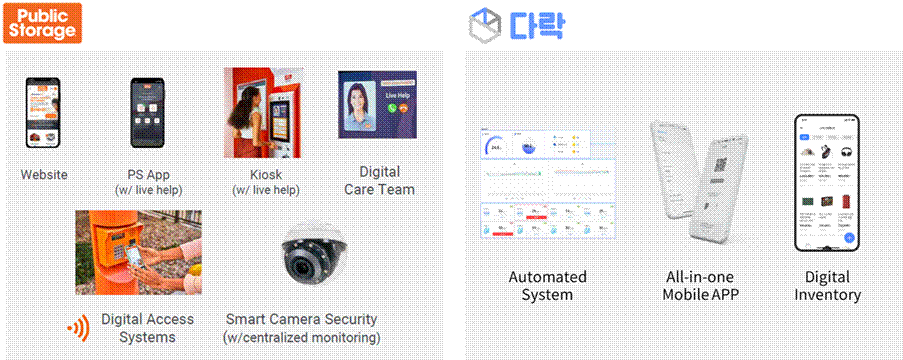
Public Storage has recently been focusing on technological innovation for Digital Transformation, and through this it is working to efficiently operate multiple locations and maintain standardized service quality. Although it is investing more than competitors, services such as kiosks and video-chat remote consultations still remain at a relatively basic level compared with Darak. In addition, these technologies are applied only to new locations, so most branches are still operated in an analog manner.
Strong brand recognition is also a very important factor. Public Storage operates many facilities in commercial areas where more than half of the U.S. population lives, thereby building strong brand awareness among customers. It has expanded its customer base by providing not just simple storage services, but practical and reliable solutions tailored to their lifestyles.
As this positive brand experience accumulates, Public Storage is creating a virtuous cycle in which having many locations naturally leads to a broader customer base. Darak has also secured high recognition by operating more than 140 locations in Seoul and the greater metropolitan area. In particular, through landmark locations such as COEX and Lotte World, it has built a strong brand image of 'self-storage = Darak.'
These are strategies that Darak has already been pursuing since the early days of its founding, when it set the future of self-storage as 'technology-centered.' Darak, which was the first in Korea to put into practice the strategies adopted by leading self-storage companies in developed countries, was able to expand sites and attract customers faster than anyone else. This is also strong evidence that Darak has unique competitiveness in the market..
Outlook for the Domestic Self-Storage Market
The case of Public Storage shows that the self-storage industry will ultimately grow under the leadership of large operators capable of realizing economies of scale. Just as the U.S. market has shifted from being centered on individual operators to being centered on large companies, the domestic market is also likely to develop in the same direction in the future.
Currently, the only company in Korea capable of realizing economies of scale is unquestionably Mini Storage Darak. The reason is that Darak has already been developing and applying, years ahead of others, the digital contract system, unmanned operations, AI-based demand forecasting, and smart storage technologies that Public Storage has recently introduced. Darak is the only company in the domestic self-storage market with a technology-based, efficient operating structure, and it is accelerating its growth even further through improved customer experience and digital innovation.
Ultimately, as the domestic self-storage market enters full-scale growth, the competitiveness of scaled operators will become even stronger, and Darak will become the company that sets the standard in the market.


