insight

Hong Woo-tae, the representative of DaLock
Mini Warehouse Darak
Mini Warehouse Darak is an self-storage operation service based on automation technology operated by Second Syndrome Co., Ltd., and is currently operating the largest self-storage facility in Korea. The self-storage industry, which began in the 1960s, is not a new topic in the global real estate industry, but in Korea it is a real estate sector entering a new growth phase.
In that context, Mini Warehouse Darak has grown in a way that is optimized for Korea's real estate conditions and IT technology, unlike traditional overseas self-storage businesses. Based on the experience of the past eight years, we would like to explore the growth of the self-storage industry across Korea and abroad, and its future direction together.
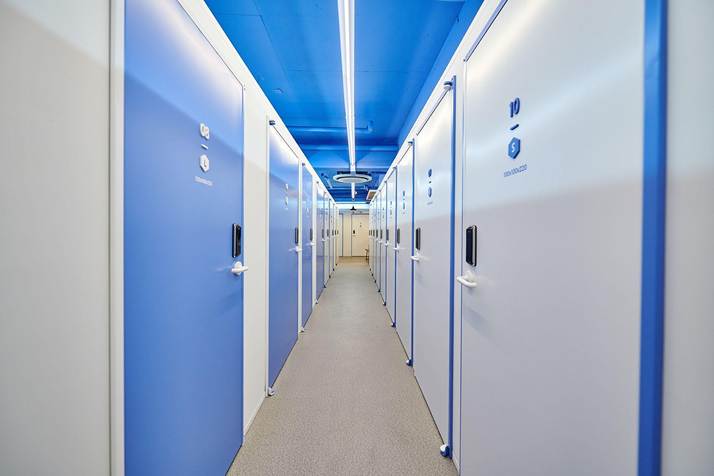
<Mini Warehouse Darak facility exterior>
The dream of buying a home that felt out of reach
To talk about the birth of Mini Warehouse Darak, I should first introduce the year-long heated discussions between me, who was working at securities firms and asset management companies, and my cofounder (Vice CEO Kim Jung-hwan). As the founders were working as so-called analysts, doing company analysis and macroeconomic analysis, we naturally became used to examining economic indicators.
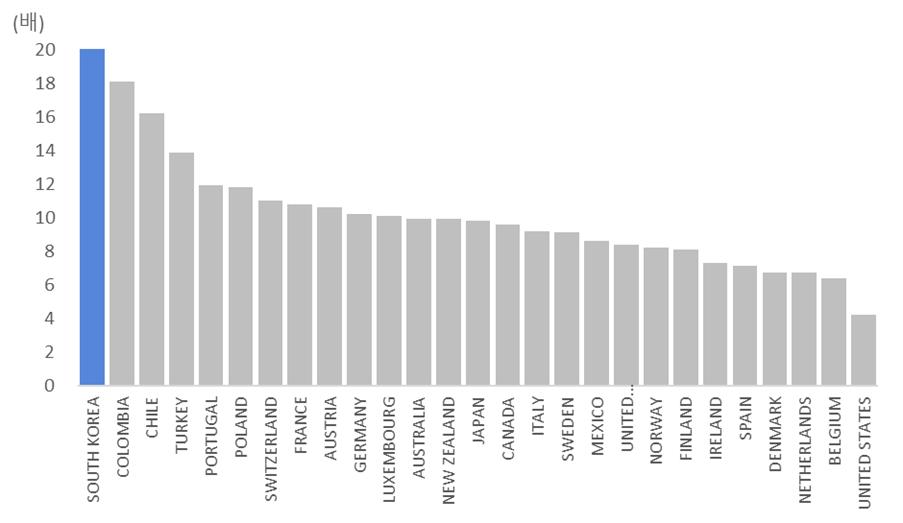
Among them were many real estate-related indicators, but one in particular was especially interesting. Domestic residential real estate prices have been steadily rising with almost no decline, and the pace is so fast that it is faster than income growth. The unfortunate(?) conclusion was that people who own assets may make money, but for those who do not, even if they work hard and save, owning a home becomes increasingly difficult.
On the other hand, when income increases, our lifestyle patterns change significantly. We start consuming items we did not before, our hobbies become more diverse, and naturally our desire to make our homes more comfortable also grows. But even if we want to move to a bigger house for a more comfortable living environment, in Korea, where monthly rent is not common, expensive home prices and jeonse deposits become a huge burden. And a home is physical; you cannot freely change its size or add more rooms. We thought that rising income and expectations for a more comfortable home life would lead to other forms of consumption or behavior.
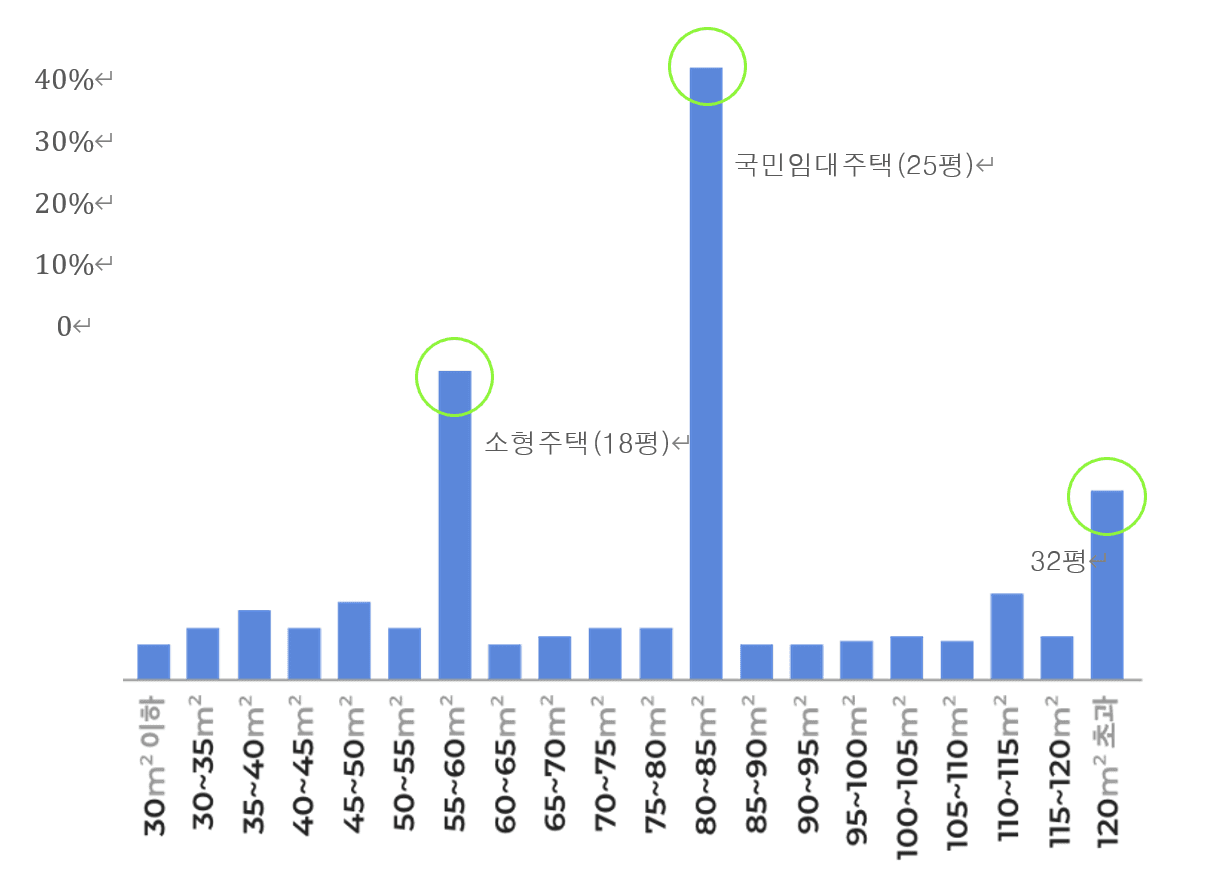
Another factor that lowers satisfaction with residential life in Korea is the standardized form of housing. Korea is still influenced by the Housing Construction Promotion Act enacted in 1973, so the residential areas supplied are almost identical. If you look at apartment presales ads, you can see numbers like 59.9m2 and 84.9m2, which are housing areas designated by the government for small housing and national rental housing, respectively. Although there have been changes in internal layouts, housing is basically supplied in standardized areas, so it cannot reflect the changes in lifestyle patterns that have taken place over the past 50 years. Compared with 50 years ago, when that law was enacted, we have more one-person households than ever before, keep many pets, and do home workouts indoors.
For example, when someone's lifestyle changes—whether becoming independent, having a child, starting a hobby that requires a lot of gear like camping, or starting to run a workshop at home—the only options for needing space are to move to a bigger home by paying hundreds of millions more in home prices or tens to hundreds of thousands more in monthly rent. Even then, you are bound by a lease contract and can only move at set times. In this way, housing centered around apartments was a market whose form and use were thoroughly determined by the state and suppliers.
<PIR index by OECD country / Source: Numbeo 2023>
<Share of apartment supply by size in Seoul / Source: Zigbang Co., Ltd. 2020>
New housing option - the external hard drive for space
This was true not only for housing but also for offices, which share the same physical characteristics and lease structure. So Darak's founders thought that a more flexible new space option was needed.
“Surely, if we reflect the rising income and changes in lifestyle patterns, we would want to improve the quality of residential life, but changing homes costs too much or has fixed timing, so isn't there an alternative? If there were more space options that I could use when I need them, as much as I need them, wouldn't residential life become more comfortable even without moving or necessarily living in a bigger house? There are also many things inside the house that are not being used and are just taking up space; couldn't we restructure them and outsource them?
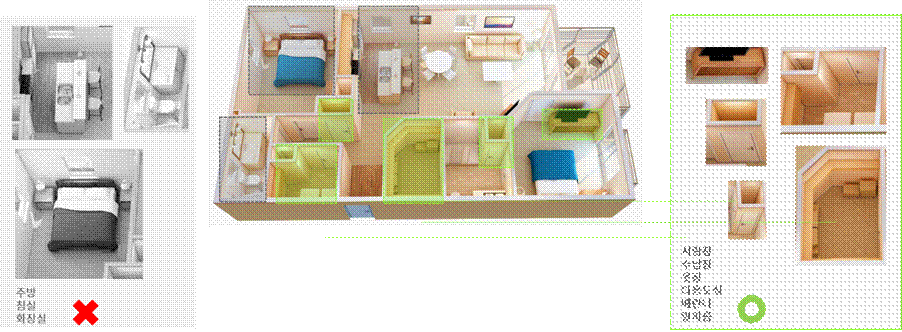
As we reconfigured the functional spaces that were mostly built into the home into something that could be outsourced, they were divided into essentials like bedrooms, bathrooms, and kitchens, and secondary things like balconies, utility rooms, and closets/storage cabinets that mainly hold items. And if the space for these secondary things were outsourced, its form would be similar to a storage unit, and because it serves a storage function, it became like an offline external hard drive. A flexible storage space that you can attach and detach as needed and use as needed—that was the beginning of Darak.
<Functions that can be removed from the home / Source: Second Syndrome Co., Ltd.>
Zero to One build-up
Later, I will also introduce Darak's AUX (Automated User Experience) and AFO (Automated Facility Operation) using IoT and AI, but the first Darak built from a zero base by two liberal arts graduates looked like a shabby basement storage room of a little over 100 square meters.
Like most startups, the founders emptied out their saved salaries to make a brand and somehow build the facility, and the MVP (Minimum Viable Product) was born. And like most business owners fall into the illusion that if they just let the world know about this great product, it will sell well, we thought the same. We almost immediately made flyers and started sales by going up and down nearby buildings. We also visited accounting and tax office buildings where there was a need for document storage, putting flyers in mailboxes, and we were chased away by security guards.
Anyway, having widely(?) promoted our novel product, we happily went to bed expecting the phone to ring nonstop tomorrow. But there were no calls the next day. Nor the day after that. Stuck with a facility that was already built, we wondered how to pivot, and on a whim we tried online search ads. Since it was a location-based product, we wondered whether online would work, and that was when inquiries finally began to come in. The founders were thrilled and sat one customer at a table, talking for nearly an hour.
“What purpose are you going to use it for? What kind of items are you going to store?”
“Is the size appropriate? What do you think of the price?”
It was a case of asking the person who came to use the product what our product was like. But the conversations we had with customers during this period became the foundation that would later determine most of Darak's service specifications and expansion strategy. Looking back now, I think the founders were, without even realizing it, matching Product Market Fit through conversations with customers.
In the end, based on customer feedback, Darak built up the basics of its service, including operating hours, facility size, unit size, pickup service, and usage price. In addition, we learned an important fact through experience on the marketing side: because self-storage is needed at different times for different people, it is not a consumer good that you stop by like a restaurant, but a product you search for when you need it. This became the catalyst for Darak to later rebirth itself as an IT technology-based platform company.
<Mini Warehouse Darak's first location in 2016 / Source: Second Syndrome Co., Ltd.>
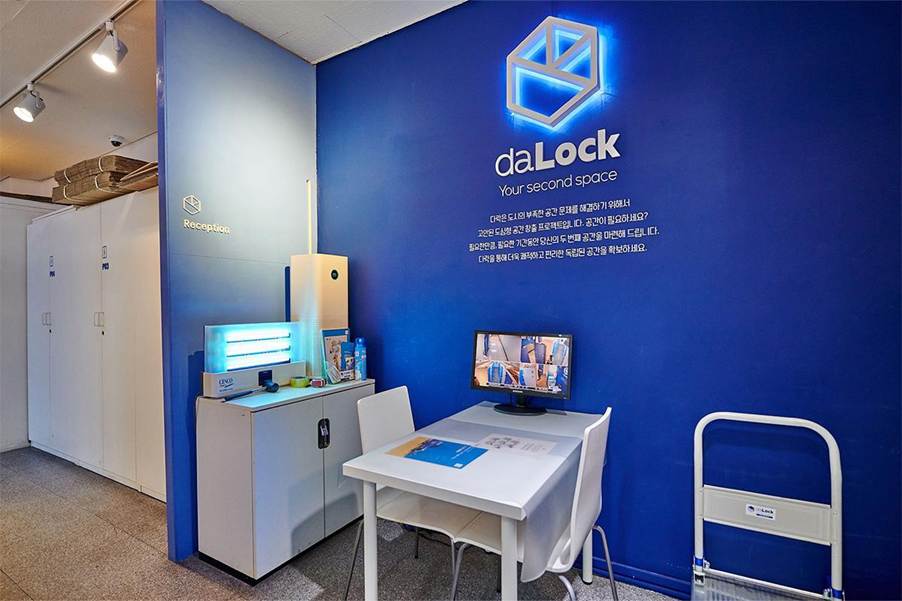
<Mini Warehouse Darak unit sizes / Source: Second Syndrome Co., Ltd.>

Self-storage, the discovery of a 74 trillion won giant market
As mentioned above, the founders created Darak through a top-down approach that estimated consumer needs from a macroeconomic perspective. It was only after starting the business that these naive founders learned that the industry they were in was called self-storage overseas, had a history of about 60 years, and was worth a whopping 74 trillion won.
It was only natural that, while being strongly shocked by the fact that many people globally shared the same idea as us and by the size of the market, it became a moment that gave us even more confidence in Darak's business.
In the next installment, we will cover the self-storage market, which has a sector weight of about 7.4% in FTSE Nareit All Equity REITs, larger than office and following data center/healthcare.
<Sector weight of FTSE Nareit All Equity REITs / Source: Nareit 2024>
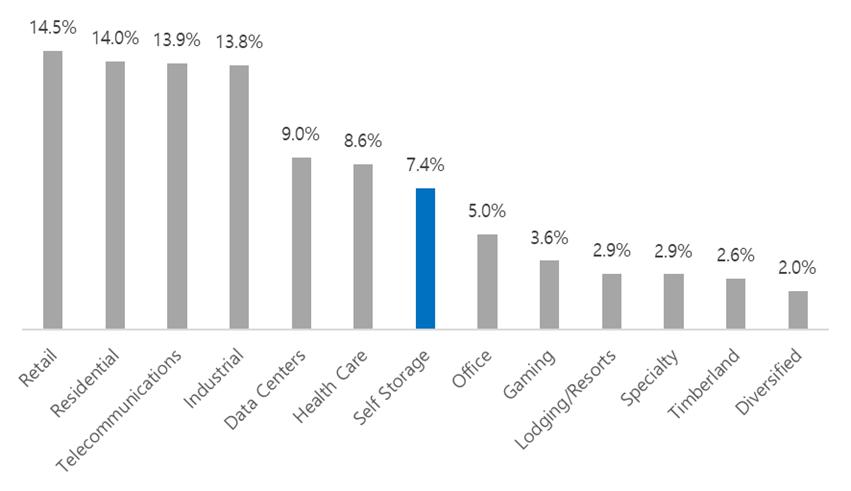
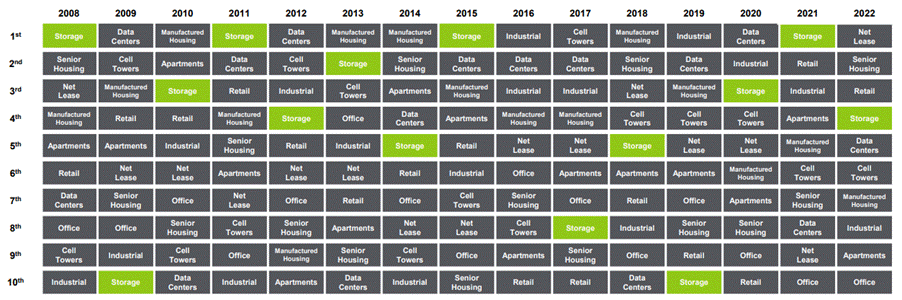
<Return ranking by real estate sector / Source: Extra Space Storage>