insight

Hong Woo-tae, the representative of DaLock
As mentioned in the previous article, the self-storage market is a huge market worth 74 trillion won, larger than offices in real estate REITs and following data centers/healthcare. In terms of investment returns, it has consistently maintained a mid-to-upper ranking among REIT sectors since 2008, except for three years, showing very solid performance.
This performance is probably due to continuous market demand and stable cash flows that can be harvested regardless of the economy. In this article, we will look at the global self-storage market, which is still unfamiliar in Korea, and then sequentially examine the growth potential of the domestic market as well.
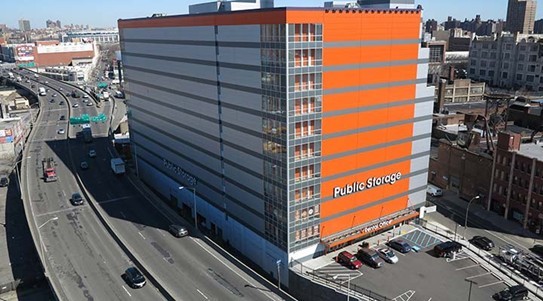
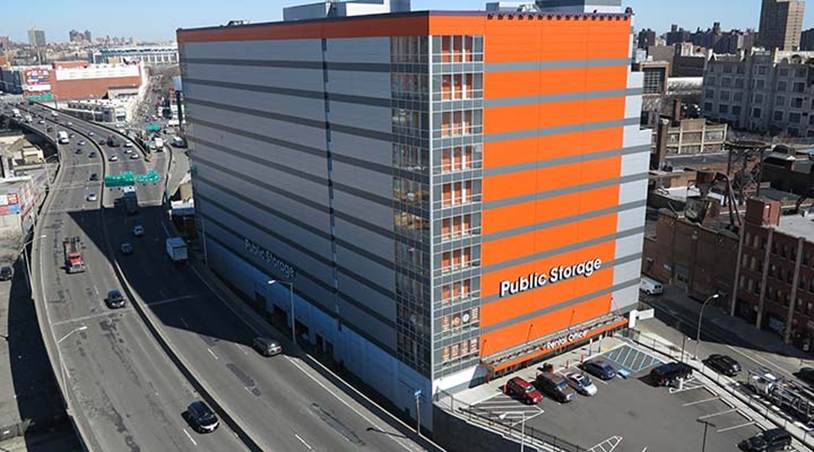
<The largest self-storage building in the world (The Bronx, New York) / Source: Public Storage>
The Origins of the Self-Storage Industry
Before looking at the current state of self-storage, understanding its history can offer many clues in judging its development potential in the Korean market. If self-storage is defined as a commercial activity in which people store their own belongings and pay for it, the first self-storage is known to have begun in Iowa, USA in late 1891.
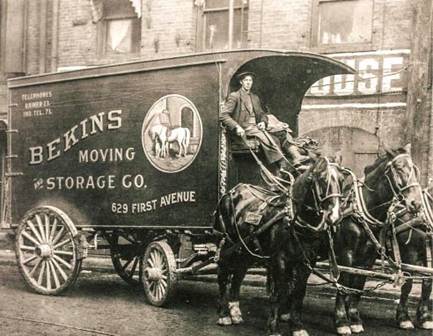
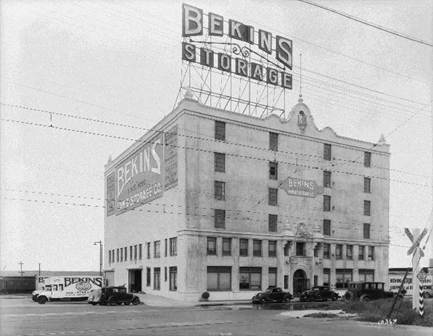
The Bekins Brothers founded a company called Bekins Van and Storage Co., and the first storage seems to have been a wagon pulled by three horses. Because they used wagons, it can be said they naturally started out in a form that combined logistics and storage from the beginning. Later, in 1906, the Bekins brothers built a warehouse in Los Angeles and are known to have provided moving services and storage moving services. And amazingly, this company still operates 150 branches across the United States and continues its moving and self-storage business!
<The Bekins wagon and the first warehouse building / Source: Bekins.com>
Storage facilities began to become more mainstream from the 1960s. After World War II ended, many household moves took place during the settlement process, and as economic growth accelerated, people bought more goods, creating a need for storage space. Companies also brought in new facilities and expanded factories, creating a need for storage space for equipment and machinery.
The first modern self-storage building also appeared in Odessa, Texas, and its name was the very straightforward “A-1 U-Store-It U-Lock-It U-Carry-the-Key.” It is said to have been used for storing fishing gear or equipment storage at nearby oil drilling facilities. Also, along with Florida, Louisiana, and Alabama, Texas had almost no basements in homes, so additional storage space was needed. That is because the groundwater level in Texas is close to the surface, making leaks and flooding a constant risk.
Entering the 1970s, the self-storage business, in which people store their own belongings, began to thrive in earnest. Self-storage chains began to appear, and many new buildings were constructed. In the 1980s, growth accelerated even more, and it began to establish itself as a field of real estate investment. In terms of demand, as urbanization and housing downsizing progressed, it began to be recognized as an essential service for daily life. During this period, self-storage also began to flourish in Europe and Australia, and from the 1990s it emerged in Hong Kong and Japan, and from the 2000s the self-storage industry began to take shape in Asia as well, including Singapore and Shanghai, China.
Triggers for Industry Development
Rather than simply telling a history story, I want to convey the insights to be gleaned from it. As mentioned in the previous article, the founders of Mini Storage Darak created self-storage (or at least something similar to self-storage) via a Top-down Approach from Korea's macroeconomy and real estate without having any knowledge of the existence of the self-storage industry, and then were shocked to learn that it was actually a 74 trillion-won industry.
The reason for the shock was not just the cliché of “The business I thought of is already being done by someone somewhere in the world,” but because, despite the size of the huge industry, it was such an unfamiliar industry to Koreans. Soon, based on their analytical DNA, the founders began to focus on why such a business had not existed in Korea.
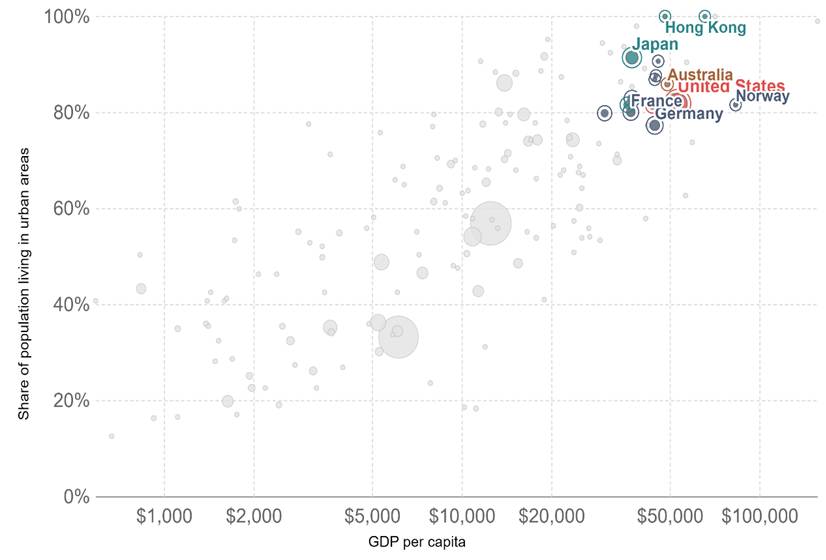
<Urbanization rate and GDP per capita by country / Source: UN>
<Number of self-storage facilities by country / Source: Second Syndrome>
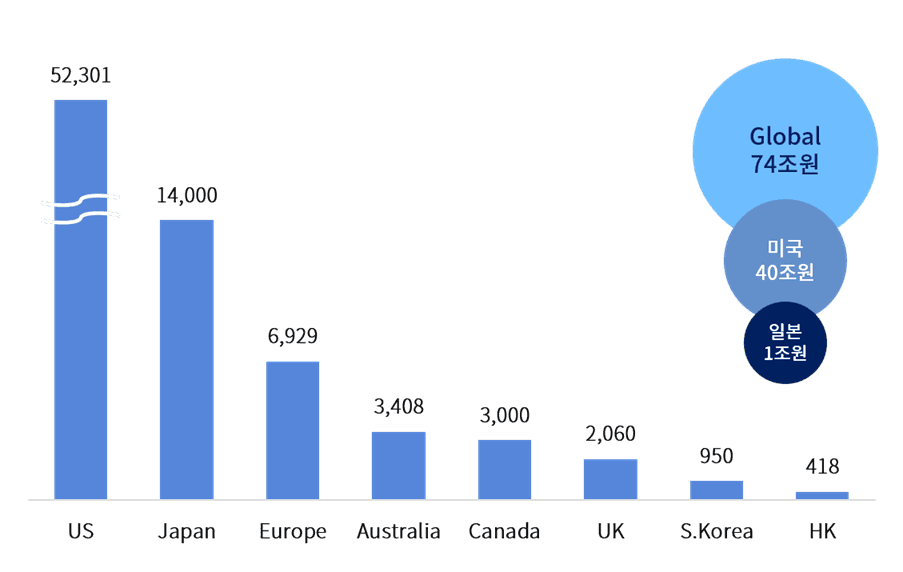
What we could infer while looking at the history of the self-storage industry above was that self-storage is closely related to housing and also highly correlated with consumption. The first chart shows the urbanization rate (the proportion of the population living in cities) and GDP per capita. The urbanization rate can be viewed as urban population density, and GDP per capita can simply be understood as income.
You can see the countries clustered in the upper right. These are all countries where the self-storage industry exists on a large scale. The number of self-storage facilities in those countries is illustrated in the chart below. In other words, if urban population density is high (80% or more) and a certain income level (USD 30,000 or more) is met, we can see that the industry grows without exception.
Even intuitively, as urbanization progresses, real estate prices per unit area rise and the price paid for space becomes expensive. As income increases, people buy more things and begin consuming items they did not consume in the past. When we move from solving basic survival problems to thinking about quality of life, expectations for housing rise, and people pursue a more comfortable life. So if one day an urban resident who pays monthly rent of 100,000 won per pyeong and enjoys consumer life is offered a space option that can be used freely at 50,000 won per pyeong, there is an incentive to choose that option.
As mentioned in the previous article, among the functions that exist in the home, the replaceable one is related to storage, so this option naturally connects to self-storage, which serves a storage function.
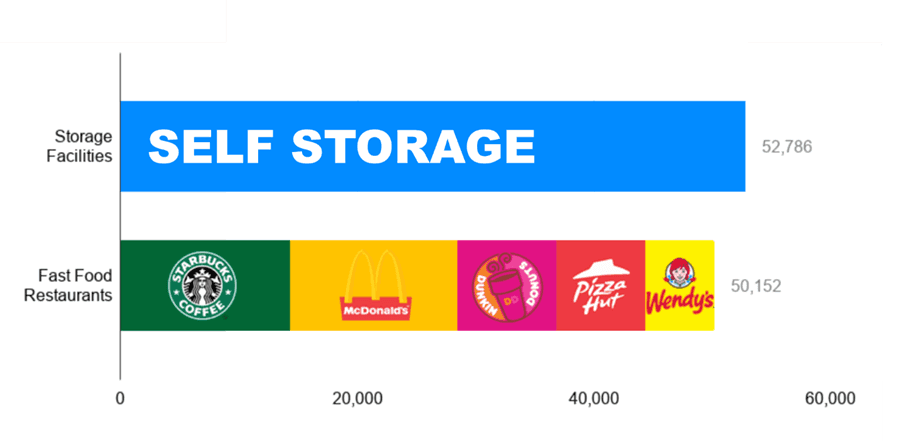
<Number of self-storage facilities in the US vs. number of fast-food restaurants / Source: Neighbor.com>
Universal Laws That Cut Across Countries and Cultures
Because this was a very macroeconomic approach, we need to look further into whether the same phenomenon appears in countries with different cultures and living environments. The self-storage penetration rate in the United States, the industry’s birthplace, is very high at about 10% of households, and neighboring Japan is not low either at about 1%.
Given the roughly 30-year gap in the timing of market formation between the US and Japan, and Japan's annual average growth rate of about 8%, it seems difficult to say that usage rates differ by culture. Japan has 14,000 facilities, which is by no means a small number.
However, the size of facilities in Japan is very small at an average of about 50 pyeong compared with the United States (an average of 1,500-2,000 pyeong). Also, while in the United States they are usually built as single-building or single-story structures, in Japan there is a mix of buildings that are a single room concept within a building, small low-rise buildings, and large buildings like those in the US. In other words, while it is difficult to say that there is a big difference in usage rates, it seems more accurate to say that there are differences in size and form by country and region.
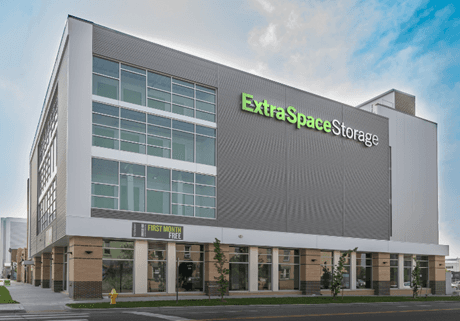
<Self-storage facilities in the US and building-unit facilities in Japan / Source: Extra Space Storage, Hello Storage>
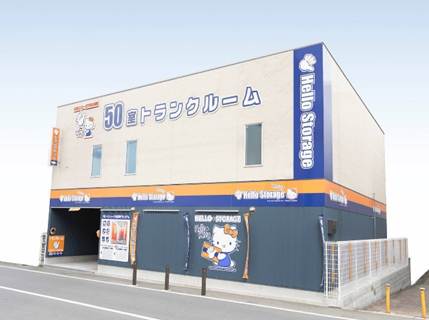
The size of housing also does not affect the formation of the industry. Of course, places like Hong Kong have such tiny living spaces that self-storage seems essential. But if this were an industry that only arises when housing is small, the United States would never have become its birthplace. Rather than housing area, income levels tend to translate into consumption of space. Except for large cities like New York, American homes that readily come to mind are two-story houses with basements, so they don't seem to lack space.
However, higher income levels lead to spending that matches them. We should assume that things Koreans, whose national income in 2022 was about USD 36,000, do not consume can be consumed by Americans whose national income exceeds USD 70,000. For example, clothes dryers have been used in the United States since the 1940s, but were introduced domestically only in the 2000s. In addition, American households commonly own items such as lawn mowers and pool cleaners.
However, self-storage usage fees differ by city and region. In highly dense cities such as New York and Hong Kong (Seoul also falls into this category), self-storage fees are set high to reflect higher real estate prices. On the other hand, places like Texas and Arizona, where real estate prices per unit area are relatively low, have lower usage fees.
Of course, the correlation is also consistent when viewed through the income level of the region. The important point is that whether the area has expensive or cheap real estate, whether the house is large or small, and whether the form and usage fee differ, self-storage emerges. Self-storage even appears in empty, barren land with nothing on it. This is a point clearly different from other real estate sectors.
<View of a self-storage facility located in Nishiku, Fukuoka, Japan>
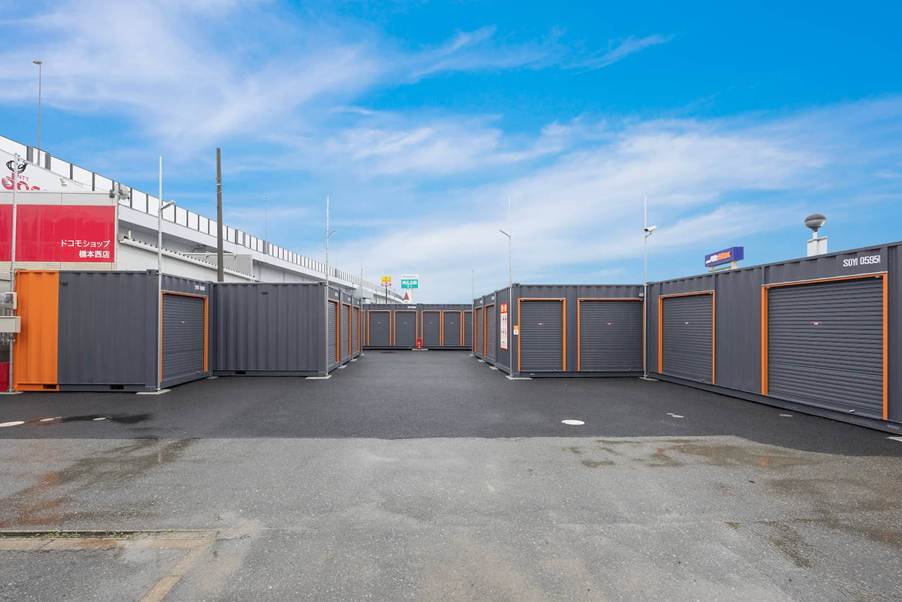
So can self-storage grow in Korea like it has in the US and Japan? As we have seen above, there are no exceptions from a macro perspective. However, in terms of its form and stage of development, Korea's demographic changes, unique housing style, and even Koreans' tendencies and real estate market conditions will also have an impact. In the next article, we will look at overseas cases of self-storage development and examine how the domestic market may evolve.


