
insight

Hong Woo-tae, the representative of DaLock
Self-storage Second Syndrome, the No. 1 company in Korea, received the top prize, the Minister of Land, Infrastructure and Transport Award, at the Urban Regional Innovation Awards held last November. Now in its sixth year, the Urban Regional Innovation Awards were established to encourage the achievements of local governments and private companies that have revitalized regions and achieved innovation through urban regeneration and strengthening the economic base.
This award is significant because it formally recognizes the contribution Mini Storage Darak has made so far to improving residential environments and urban development. It also suggests that Darak will need to play an even more important role in giving new value to cities and regions in the future. In this article, we will look at self-storage from the perspective of urban regeneration, which revitalizes aging areas under government leadership.
< 2024 Urban Regional Innovation Awards Minister of Land, Infrastructure and Transport Award / Source: Second Syndrome >

The Definition and Purpose of Urban Regeneration
'Urban regeneration' is one of the government and local governments' key projects. At the <2024 Urban Regional Innovation Expo>, more than 130 local governments and public institutions promoted the results of their respective urban regeneration projects. It was impressive to see many local governments making efforts to revitalize underdeveloped areas based on concepts tailored to each region.
Urban Regeneration refers to a city project that restores vitality by adding new functions to cities that have declined due to changes in population and industrial structure. The Special Act on the Activation and Support of Urban Regeneration, enacted in 2013, defines urban regeneration as follows: “revitalizing declining cities caused by population decline, changes in industrial structure, unchecked urban expansion, and aging residential environments through strengthening local capacity, introducing and creating new functions, and utilizing local resources in economic, social, physical, and environmental terms.”
Ultimately, urban regeneration pursues an approach differentiated from redevelopment, which aims to maximize economic gains. Its goal is to preserve existing buildings and restore cultural value, and it is a method of inducing change by investing public funds in areas where private-led redevelopment or reconstruction is difficult. It is mainly applied to places with poor location, infrastructure, or scale, or where aging is so severe that private investment is difficult.
In this way, urban regeneration has become a core tool of public policy that respects a region's history and culture while improving residents' quality of life and securing the city's sustainability.
Changes in Korea's Urban Regeneration Policy
Although the name and direction of the policy have changed little by little over time, 'urban regeneration' is one of the key projects that occupies an important share of the Korean government's real estate policy. Let's take a look at how related policies have changed and in what direction they are currently being pursued.
The need for urban regeneration began to be discussed on a small scale in the 2000s. This was because many cities became aged as urbanization and industrialization progressed rapidly in the 1990s, bringing capacity limits and economic problems to the fore.
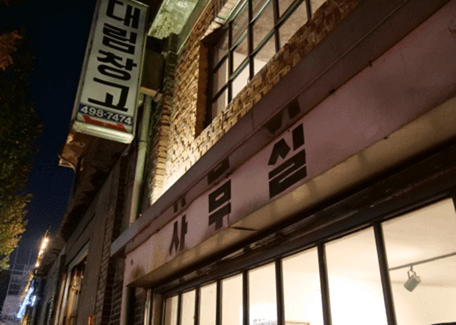
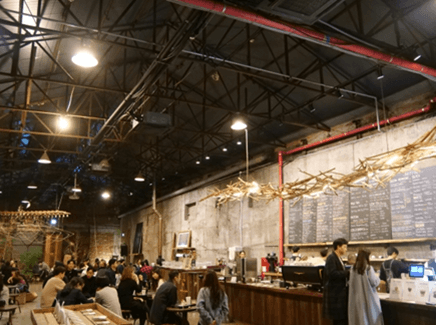
With the enactment of the Urban Regeneration Act in 2013, a legal and institutional foundation for promoting urban regeneration was established. From this point on, the need for development that preserves as much as possible the history and characteristics of the region began to emerge, rather than the conventional redevelopment method of demolishing old buildings and rebuilding them from scratch. Seongsu-dong is a representative example, where old factories and warehouses were transformed into cafes and galleries while keeping their exterior intact, becoming a major hotspot.
< A representative success story of urban regeneration, 'Daelim Warehouse in Seongsu-dong' / Source: Seoul's Seongdong District >
Before: A shabby, old warehouse
After: Transformed into a trendy cafe
Government-led urban regeneration projects began in earnest in 2017 with the launch of the 'Urban Regeneration New Deal Project.' It was a large-scale project that invested as much as KRW 50 trillion over five years, and it departed from the conventional central-government-led approach by being driven by local governments and reflecting residents' opinions. From 2017 through last year, a total of 544 local governments were selected as target areas and carried out projects such as resident hub facilities and tourism resource development.
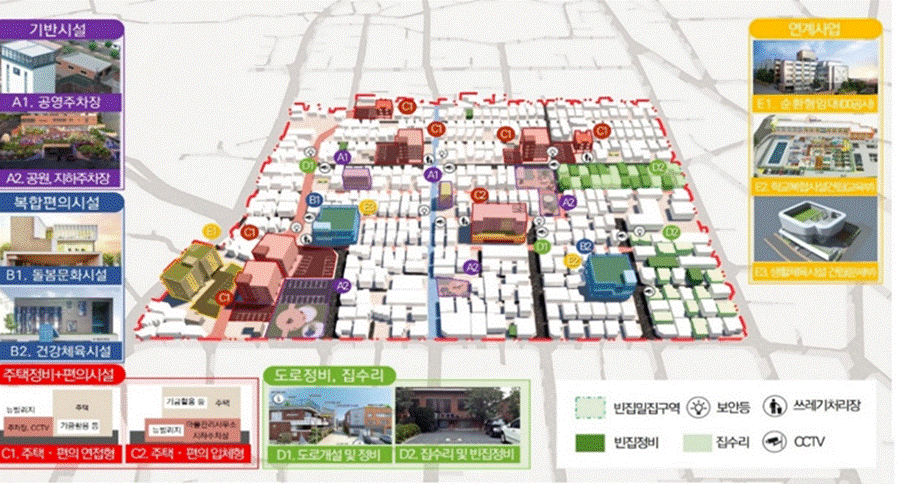
This March, the Ministry of Land, Infrastructure and Transport announced the 'New:Village' project to improve aging single-family homes and villa neighborhoods. While existing urban regeneration focused on local economic activity and tourism resource development, 'New:Village' focuses on improving the actual living environment of low-rise residential areas such as villas and single-family homes. Its main goal is to expand resident convenience facilities such as parking lots and care facilities in low-rise residential areas with low housing satisfaction due to a lack of convenience facilities.
This year, it plans to select 30 areas and provide up to KRW 15 billion per area, and it is drawing high interest, with 61 local governments applying.
< New:Village project concept (example) / Source: Ministry of Land, Infrastructure and Transport >
Urban Regeneration Cases Created by Mini Storage Darak
Mini Storage Darak is also contributing to urban regeneration. That is, in terms of giving new functions to aging spaces that are difficult to utilize. It not only transforms idle spaces in urban areas into revenue-generating storage spaces, but also contributes to improving the residential environment so nearby residents can live in more spacious surroundings.
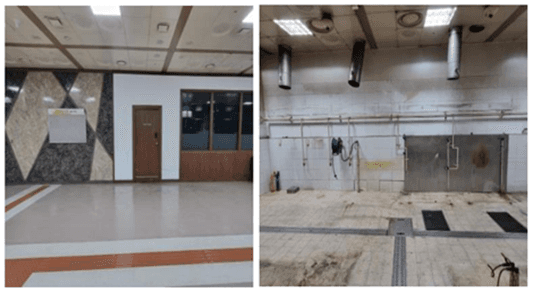
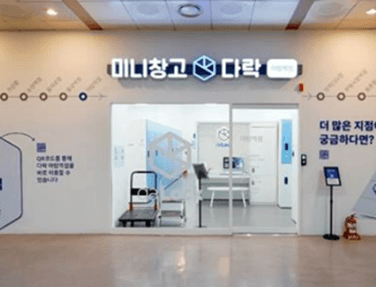
A representative example is Mini Storage Darak Yatap Station. It made use of the former waiting room of the Seongnam intercity bus terminal, which had been closed due to the prolonged COVID-19 pandemic and declining users. With the sudden suspension of the terminal's operations, the terminal was almost like a huge abandoned building.
By introducing Mini Storage Darak, it not only generated revenue for the facility management company that had been struggling, but also was reborn as a valuable storage space for small business owners inside the terminal and nearby residents.
Even now, when you visit Seongnam Bus Terminal, its occupancy rate is still less than 30% if Mini Storage Darak is excluded. Although it occupies a facility that is not in operation, Darak's facilities are used more than 90%, proving their effectiveness in urban regeneration projects.
Many people visit the terminal not to take a bus, but to store their belongings at Darak. Mini Storage Darak is one of the representative examples of giving new value to unused spaces.
< Seongnam Bus Terminal waiting room reborn as Mini Storage Darak / Source: Second Syndrome >
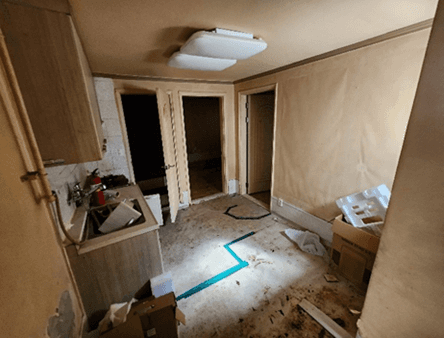
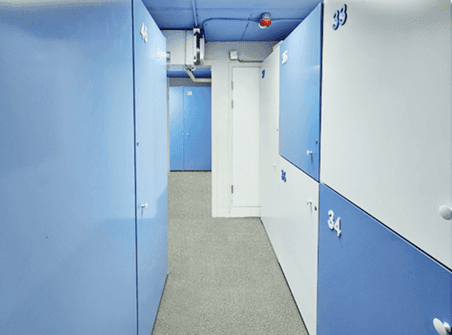
In addition, Darak created a meaningful case in the New:Village project promoted by the Ministry of Land, Infrastructure and Transport. Together with Korea Land and Housing Corporation (LH), it successfully carried out a project to convert three semi-basement homes in Seoul into self-storage facilities for nearby residents.
The semi-basement spaces, which lost their residential function because people could no longer live there under the government policy, were transformed into convenient facilities for storing belongings for nearby residents. As the first phase of the project, it successfully turned three semi-basement homes in Seoul into Mini Storage Darak facilities. (Corresponding to Mini Storage Darak Ttukseom Station, Dunchon-dong Station, and Pungnap locations)
< Mini Storage Darak in semi-basement homes promoted jointly with LH / Source: Second Syndrome >
As this was the first attempt in Korea, the process was not entirely smooth. Since it was carrying out public duties, public interest was prioritized over profitability, and it had to satisfy Darak's user experience requirements in semi-basement homes.
They had to move out the residents and make use of the remaining space, but potential uses such as local community spaces and care facilities had characteristics that made them difficult to establish in semi-basement facilities. However, self-storage, which is an infrastructure service where things rather than people stay, could accommodate these characteristics, and a partnership was established with Mini Storage Darak, the leading domestic company that has created numerous restructuring cases.
At first, only installing simple household storage was discussed, but without an operator, even after remodeling, there was a high likelihood that the facility would be left neglected due to aging. In that case, it would deviate from the original purpose of urban regeneration for local residents. There were also concerns about whether the semi-basement space would damage stored items and whether facility operations would negatively affect residents.
So, rather than simply building a facility, Darak's automated operation technology was applied so that it could continue to be managed in the future. As a result, the dark and damp semi-basement homes were reborn as comfortable storage facilities for residents and contributed to the local community through ongoing management. This created a meaningful public-private cooperative urban regeneration case through the desirable synergy between a public institution and a private company. It is expected that additional discussions will continue with local governments that are highly interested in urban regeneration, thanks to the project's purpose and positive expected effects.
The Role of Self-Storage in Urban Regeneration, Which Will Grow Even More
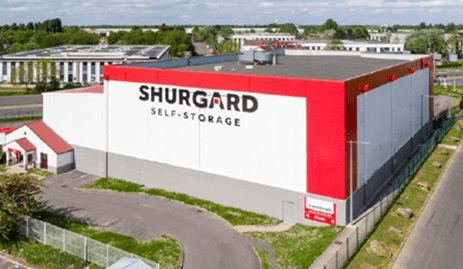
Urban regeneration is closely related to Valu-Add or Opportunistic strategies among real estate investment strategies in that it develops undervalued distressed properties. In developed countries that experienced changes in their economic structure before us, there are many cases of turning buildings that had outlived their usefulness into self-storage facilities.
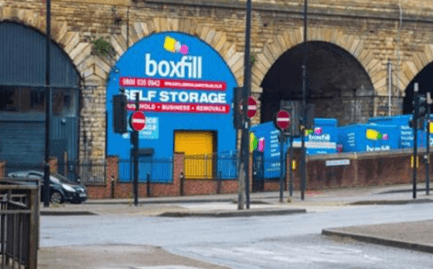
Representative examples include SHURGARD in Germany, which utilized an unused factory that had fallen out of operation due to changes in the local economy, and boxfill in the UK, which utilized unused railway arch spaces. In particular, boxfill can be seen as an exemplary case of successfully converting spaces that could otherwise have been used for homelessness or crime into self-storage. It is similar to Darak's case of converting an unused intercity bus terminal into self-storage.
< Self-storage facilities utilizing unused real estate / Source: each company website >
Domestic urban regeneration can be seen as a structure in which the government bears the investment risk for development rather than companies. Looking at the policy direction, self-storage is expected to play an increasingly important role in Korea as well. This is because the goals pursued by urban regeneration and the areas to which self-storage can contribute are closely aligned. The reasons why self-storage is suitable for improving the living environment of aging low-rise residential areas, a current government initiative, can be summarized in three points.
First, self-storage is a service that can contribute to improving residents' actual living environments. Although low-rise residential areas such as single-family homes and villas have relatively low housing costs, their popularity is gradually declining. As of the first half of this year, the share of low-rise residential areas in housing sales transactions was less than 15%, marking an all-time low, and supply is also on a downward trend.
< National non-apartment housing supply performance / Source: Ministry of Land, Infrastructure and Transport >
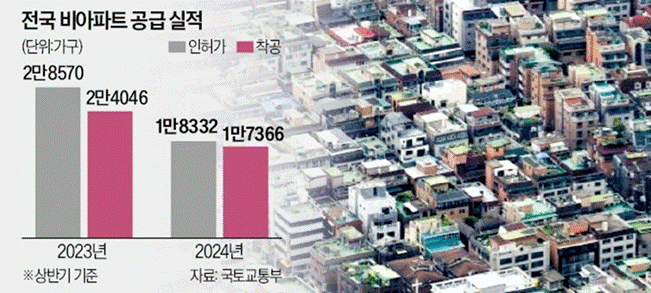
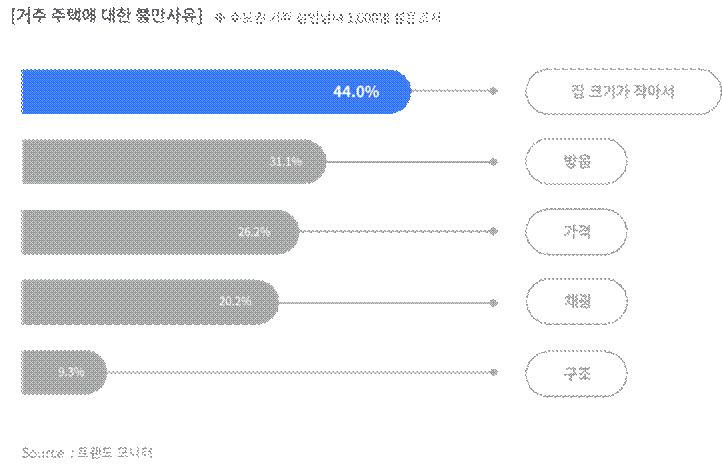
One of the reasons for this decline in demand is the inconvenience caused by small living spaces. Accordingly, the need to outsource space is bound to increase. The fact that Mini Storage Darak branches located in older houses or villa neighborhoods have very high occupancy rates supports this.
< Reasons for dissatisfaction with residential homes / Source: Trend Monitor >
Second, self-storage has the advantage of being operable in a variety of locations and environments. Because it is a service where items stay, it has fewer restrictions on location and environmental conditions than other industries. In addition, Darak can build an unmanned automation solution by leveraging its experience operating multiple locations and IoT technology. This means it does not require on-site staff, can be managed at low cost, and enables sustainable facility operation.
Lastly, self-storage has positive effects from an ESG perspective as well. By providing space to store unnecessary belongings, it can improve resource efficiency and help reduce discarded consumer goods. In addition, self-storage consumes less energy and emits less carbon than services that people frequently visit. All Mini Storage Darak locations maintain only the optimal environment required for storage, maximizing energy efficiency.
In conclusion, self-storage can serve as an efficient solution that meets the main goals of urban regeneration: improving the actual environment of low-rise residential areas, flexible location conditions, and enhancing sustainability.
So far, we have looked at government-led urban redevelopment projects, urban regeneration, and the potential for self-storage to be utilized. In the future, urban areas that are declining due to low birth rates and aging populations will increase further. In a situation where growth potential is limited due to population decline, the importance of urban regeneration that makes the most of existing facilities rather than full-scale redevelopment that requires a lot of money and resources is likely to become even more pronounced. As we have seen above, there appears to be a lot that self-storage with automated operation technology can do in urban regeneration projects.


