
insight
Mini Storage DaLock
1. Overview: Amendment to the Building Act for Shared Storage Facilities
Since the second half of 2025, the amendment to the Enforcement Decree of the Building Act, which changed the landscape of the domestic self-storage (urban storage) industry, has been implemented in earnest. The key of the amendment is that "shared storage facilities" with a total floor area of less than 1,000㎡ have been officially established as a sub-detailed use of Type 2 Neighborhood Convenience Facilities under the Building Act.
As the regulatory barriers, which had been the biggest obstacle to installation in urban areas, have collapsed, resolving the housing space shortage for single-person households and the explosive growth of the related market are becoming a reality. At the center of this historic legislative amendment was the leading effort of Second Syndrome, the operator of South Korea's No. 1 self-storage 'Mini Warehouse Darak', which has led institutional improvement for several years, starting with the regulatory sandbox.
2. Background of the Building Act Amendment and Second Syndrome’s Regulatory Innovation Journey
2.1 Limitations of Existing Regulations and Barriers to Entering Urban Areas
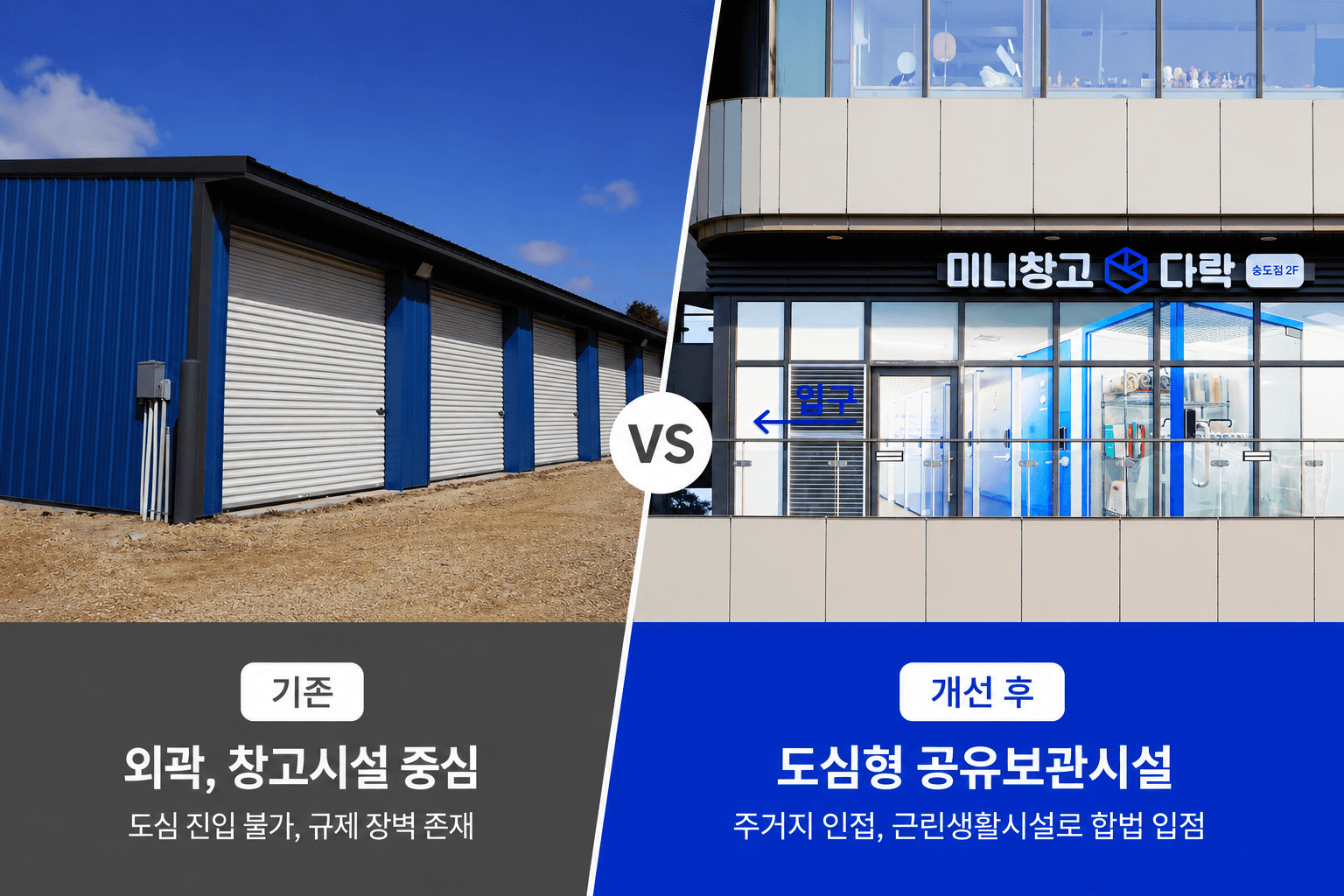
In the past, under the Building Act, self-storage had no separate detailed regulations and was classified as a "warehouse facility," identical to large logistics warehouses in outlying areas. As a result, the following fatal limitations existed:
Inability to enter urban and residential areas: It was virtually impossible for warehouse facilities to enter buildings in general residential or commercial areas.
Mismatch between demand and supply: Due to the increase in single-person households, narrow living spaces, and rising real estate prices, demand for storage in urban areas surged, but companies faced extreme difficulties expanding branches near residential areas due to legal regulations.
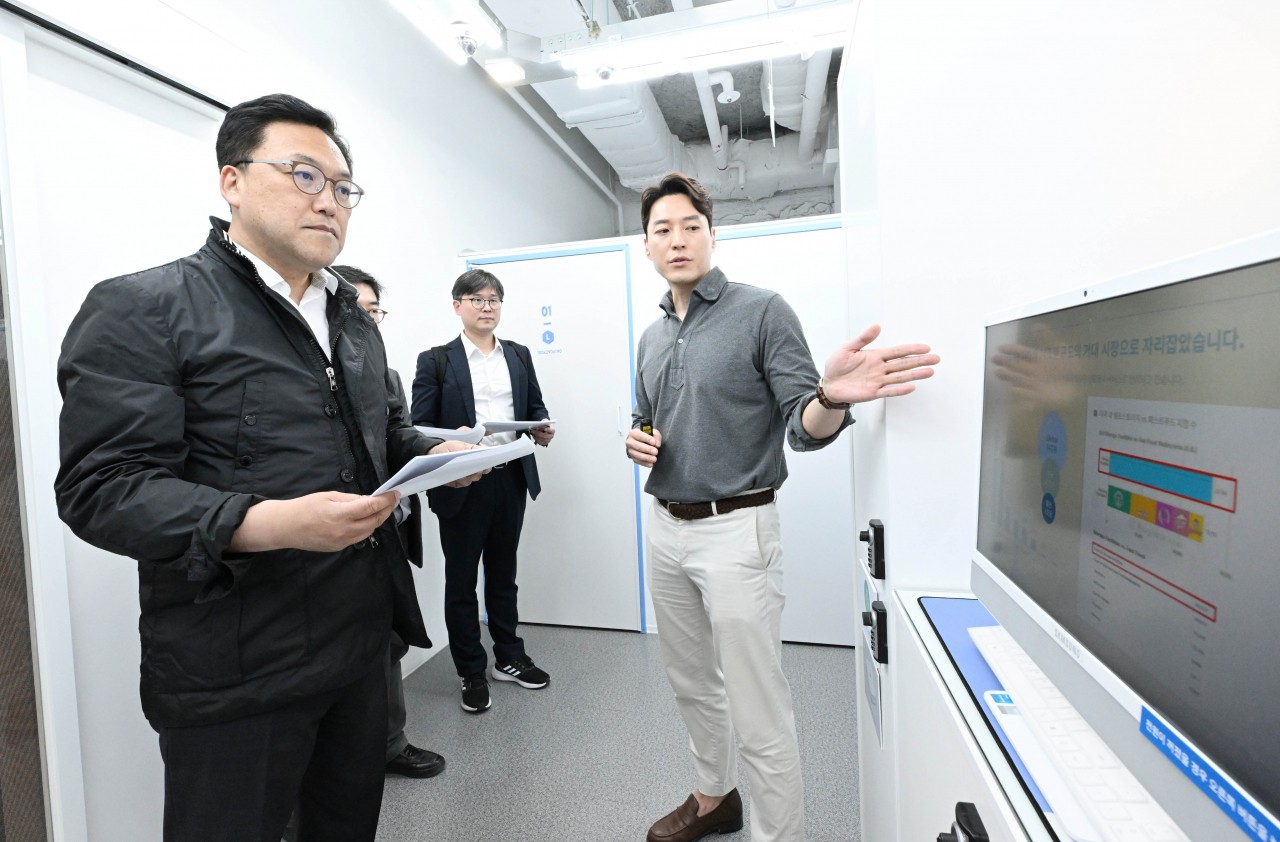
To resolve this industrial contradiction, Second Syndrome, which operates 'Mini Warehouse Darak', actively utilized the government's regulatory sandbox (special exception for demonstration) system to find a breakthrough.
Verification of safety through special exceptions: Second Syndrome directly demonstrated the necessity and safety of shared storage services utilizing vacant spaces in urban areas through the operation of demonstration branches.
Continuous communication with government ministries: Beyond simply being designated for the regulatory sandbox, the company persistently conveyed hands-on feedback and data to related ministries, such as the Ministry of Land, Infrastructure and Transport, emphasizing the need for a 'fundamental legislative amendment' rather than a mere 'temporary permission.'
Establishing industry standards: The company logically convinced authorities that urban shared storage facilities are not mere warehouses, but possess value as 'neighborhood convenience facilities' that enhance citizens' living convenience. As a result, through the stepping stone of the regulatory sandbox, it finally bore fruit in the form of an official legislative amendment.
3. Related Industry Trends and Effects After the Amendment
3.1 Explosively Grown Self-Storage Market
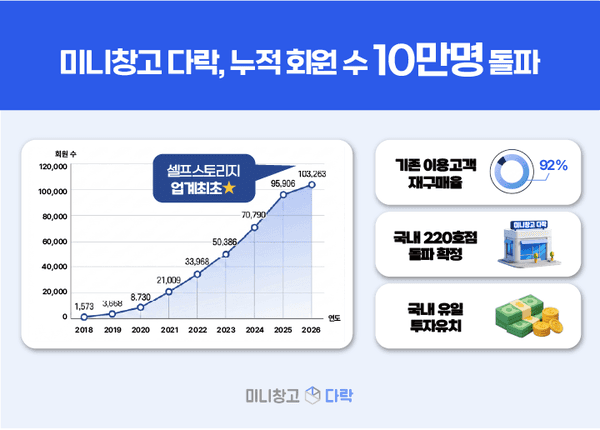
The domestic self-storage market has recorded rapid growth in recent years, centered around major metropolitan areas.
Surge in the number of branches: As of 2024, just before the law amendment, the number of self-storage branches in Korea had already reached about 300, showing a phenomenal growth rate of 56% compared to the previous year.
Key target audience: Single-person households with narrow residential space, individuals in their 20s to 40s who are sensitive to space utilization, and consumers seeking storage for personal hobby goods, such as camping and golf, are driving market expansion.
3.2 Positive Butterfly Effect Brought by the Amendment
Maximizing consumer convenience: As the installation of shared storage facilities near residential and urban areas became unrestricted, the living convenience of vulnerable housing groups and single-person households looking to maximize space efficiency has greatly improved.
Market activation and expansion of startup opportunities: As legal entry into Type 2 Neighborhood Convenience Facilities became possible without changing the building use to a 'warehouse facility,' the entry barrier to the self-storage market has lowered, and new startup opportunities for small business owners and startups have significantly increased.
4. Conclusion: Second Syndrome as a Regulatory Innovator
The past regulatory relaxation and amendment of the Enforcement Decree of the Building Act go beyond the simple creation of a new category of use; it is a representative success story of regulatory innovation where a startup’s innovative ideas met the regulatory sandbox system to change national legislation.
Thanks to the proactive efforts of Second Syndrome (Mini Warehouse Darak), which identified long-standing pain points in the market and ran to amend the law, not only South Korea's No. 1 self-storage 'Mini Warehouse Darak' but the entire South Korean self-storage industry is continuing stable and explosive growth within the legal framework.


