Back to News
Press release
Financial News
As housing costs weigh on households, demand for 'storage' surges... Second Syndrome launches 5 'Mini Warehouse Darak' branches at once
Recently, with the increase in one-person households and the steep rise in housing costs, demand for a 'minimal life' that efficiently makes use of small living spaces is surging. Amid this market trend, the No. 1 company in Korea's self-storage (shared storage) market has begun an aggressive expansion by opening new branches one after another at major hubs in the Seoul metropolitan area.
Second Syndrome announced that it had strengthened its nationwide network by opening five new branches of its storage logistics service brand, '‘Mini Warehouse Darak'. The newly opened branches are Gimpo Pungmu, Junghwa-dong, Gaepo, Yeonsu, and Seokmori, totaling five locations, evenly distributed across key metropolitan areas including Seoul, Incheon, and Gimpo in Gyeonggi Province. With this, Second Syndrome has further solidified its position as the industry leader with the most branches in Korea.
This new expansion is significant not merely as branch growth, but because it has demonstrated its capability in 'space rebuilding'—breathing new value into idle spaces in urban areas. In fact, Gimpo Pungmu, Gaepo, and Yeonsu branches repurposed commercial facilities that had long been left vacant, while the Junghwa-dong branch transformed an underground semi-basement home with no residents into a modern storage space. In the case of the Seokmori branch, an aging suburban warehouse facility was remodeled by integrating cutting-edge Internet of Things (IoT) technology. This is also drawing attention as a new alternative to solving the growing social problems of vacant storefronts and aging homes in urban areas.
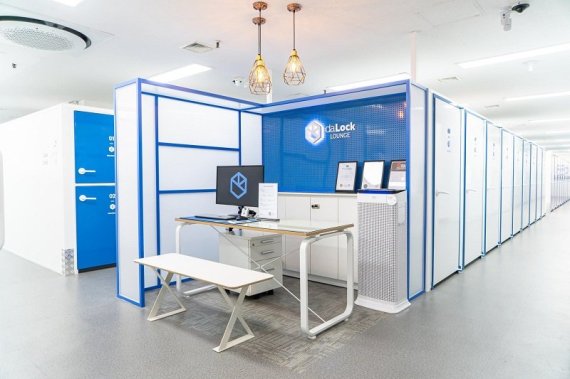
(Photo=Second Syndrome) Interior of a Mini Warehouse Darak branch. It provides an optimal storage environment where customers can entrust their belongings with confidence through an unmanned automation solution based on AIoT technology.
The core competitiveness of Mini Warehouse Darak is its 'fully unmanned automation system' based on unrivaled technological capabilities. By building an AIoT-based Space Intelligence system that combines artificial intelligence and IoT technology at all branches, it operates 24 hours a day without human intervention. Through a central control system, the temperature and humidity inside each branch are monitored in real time to maintain an environment optimized for stored items, and a security system is in place that allows immediate response when any abnormal signs are detected.
User convenience has also been maximized. Through Korea's only dedicated mobile application (app), the entire process from contract to payment, entry, and use can be handled contactlessly. In particular, by using the app's 'tour feature,' customers can preview the size of storage units and movement routes in 3D even before visiting, which has received a strong response. Thanks to this convenience, not only individual customers but also small business owners and online sellers are being drawn in, and it has been found that the proportion of long-term use is high, with the average usage period per customer reaching about 11 months.
A Second Syndrome representative said, “As housing costs rise, demand for using external space to improve living comfort instead of expanding living space continues to grow steadily,” adding, “With last year's revision of the Building Act laying the groundwork for operating self-storage in urban areas, we will continue to identify idle spaces throughout the city and focus on improving convenience in customers' residential lives.”