Back to News
Press release

DaLock
Semi-basements that are hard for people to live in are transformed into 'Mini Storage Darak'
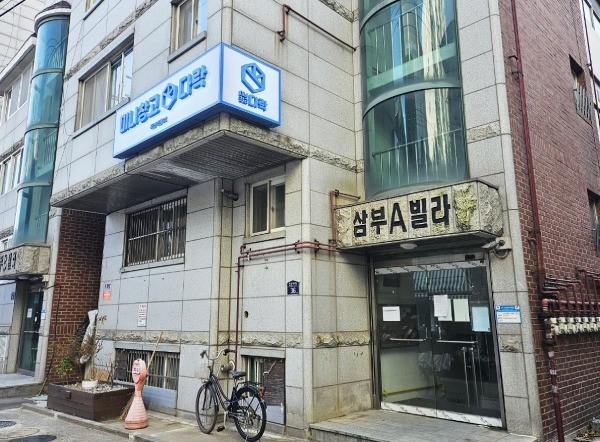
(Seoul=News1) Reporter Jang Do-min = Self-storage operator Second Syndrome announced on the 27th that it has opened three housing-style ‘Mini Storage Darak’ locations that make use of vacant semi-basements in multi-family homes.
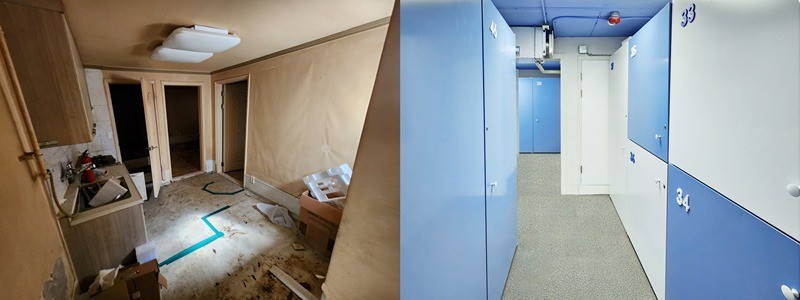
The newly opened locations are the first cases of the 'LH Storage' project jointly being promoted by Second Syndrome and Korea Land & Housing Corporation (LH). LH Storage converts the semi-basement spaces of purchased rental housing units, which remain vacant after existing residents move to above-ground floors, into self-storage facilities, providing storage space for residents and nearby people.
The semi-basement vacancies targeted by the project were idle spaces that had not been used because no one lived there after the residents moved out. Based on its know-how in installing the largest number of storage facilities in Korea, Second Syndrome improved the vacant semi-basements into pleasant spaces where items can be stored.
It also plans to provide an environment where customers can store their belongings with peace of mind by using unmanned automation operating technology based on IT and IoT.
Korea Land & Housing Corporation (LH) shared part of the renovation costs for installing the branches and plans to use part of the profits for housing management and resident support.
The housing-style Mini Storage Darak locations that have opened this time are the Ttukseom Station branch (Seongsu-dong, Seongdong-gu), the Dunchon-dong Station branch (Seongnae-dong, Gangdong-gu), and the Pungnap branch (Pungnap-dong, Songpa-gu). All three branches are located in easily accessible residential areas, so nearby residents and small business owners are expected to be able to store items conveniently.
A Second Syndrome official said, "Mini Storage Darak is not only a resident convenience facility that can replace a lack of space, but also an eco-friendly facility that does not generate noise or pollution during use, so nearby residents have responded positively," explaining.
Second Syndrome CEO Hong Woo-tae said, "This semi-basement storage is a meaningful example showing that Mini Storage Darak can turn buildings under any environmental conditions into valuable spaces," and added, "We will continue to contribute to urban regeneration by giving new value to various aging idle sites."
Reporter Jang Do-min (jdm@news1.kr)