insight

Hong Woo-tae, the representative of DaLock
It is said that last year, private resident storage units were installed in over 50% of newly constructed apartments in Seoul. As 53% of all households in Korea reside in apartments, many attempts are being made to increase value through community facilities designed for resident convenience.
In this article, we would like to focus on how self-storage can be connected to in-apartment resident storage, and what role it can play in the management strategy of premium residential communities.
Apartment Community Service Competition Decided by 'Operation'
The competition for premium apartment brands among major domestic construction companies is fiercer than ever. Since the floor plan structure or location are elements that are difficult to change easily, community facilities and services that govern the actual living experience of residents are acting as the core strategy for premium positioning.
Meanwhile, community facilities such as gyms, golf driving ranges, and study cafes have become basic options, and as apartments equipped with swimming pools, movie theaters, breakfast buffets, and even on-site bowling alleys have emerged, a sort of hardware competition has continued.
However, the perception is spreading that it is difficult to differentiate with these facilities alone. This is because resident satisfaction completely changes depending on how the same facility is operated. While the stage up until now was merely having gym facilities in the complex, we have now entered a phase where resident personal trainers run exercise programs for residents. We are now entering an era where 'operating services' rather than 'visible facilities' dictate the premium value.
The Necessity of Partnering with Industry-Leading 3rd-Party Services
<CGV Gold inside Seocho Gran Xi / Source: GS E&C>
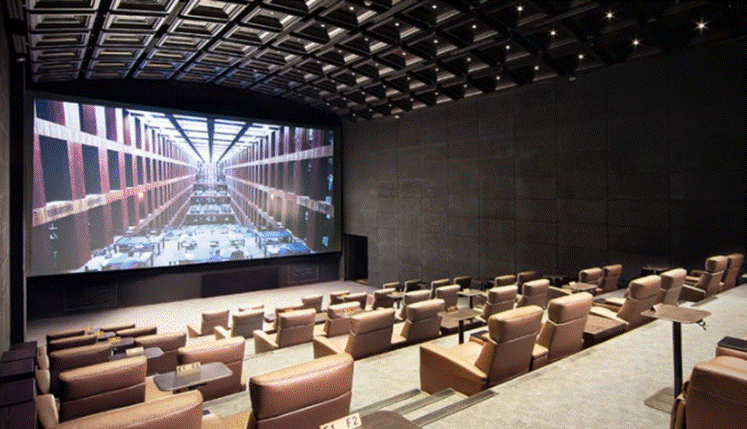
Since apartment complexes select outsourced management entities through the Council of Occupants' Representatives, it is difficult for construction companies to manage operation quality after occupancy. Therefore, the most realistic and effective strategy is to form a partnership with an industry-leading 3rd-party service from the construction phase and plan the facility itself as an 'operable asset.'
The construction company practicing this strategy most proactively is GS E&C. Xi has built the 'content' of community spaces through collaboration with various industry-leading brands.
In partnership with CGV, they operate the in-complex movie theater 'CGV Gold,' and in some complexes, they have brought in Starbucks instead of unmanned cafes to operate exclusively for residents. There are also cases where offline bookstores based on curation are installed in complexes in partnership with Kyobo Book Centre to provide book recommendation services tailored to residents' tastes.
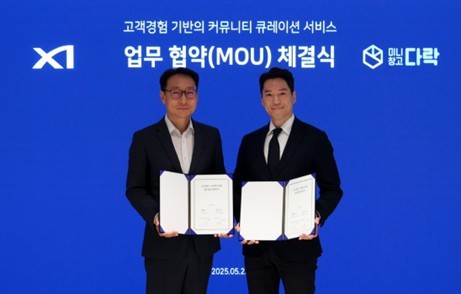
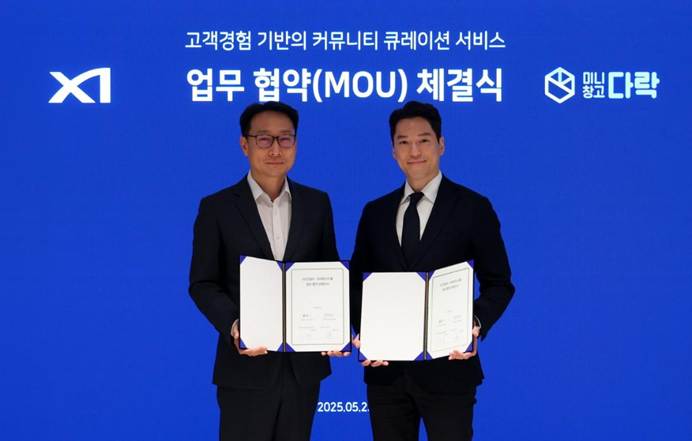
In this way, Xi is a brand that has proactively reflected the philosophy of 'how to operate community spaces.' And in May of this year, we, Second Syndrome, signed a strategic business agreement with GS E&C and are currently in discussions to introduce Mini Storage DaLock's premium self-storage to Xi complexes.
<GS E&C X Second Syndrome Business Agreement Signing Ceremony / Source: Second Syndrome>
Critical Issues of Existing Resident Storage Units
Resident storage units are an indispensable element in the pre-sale designs of recent newly constructed apartments. According to Real Estate 114, as of 2023, approximately 83% of pre-sale apartments in the metropolitan area provided resident storage, and in occupant surveys, 76% of respondents answered that "the presence or absence of a resident storage unit affects apartment selection."
Resident storage is a storage alternative that allows for the distribution of items without encroaching on indoor space, effectively securing an additional area of about 0.7 to 1.5 pyeong per household. It is particularly suitable for storing items that are bulky but used infrequently, such as camping gear, golf bags, and baby strollers.
<Apartment Resident Storage Fire Accidents / Source: Various media website homepages>
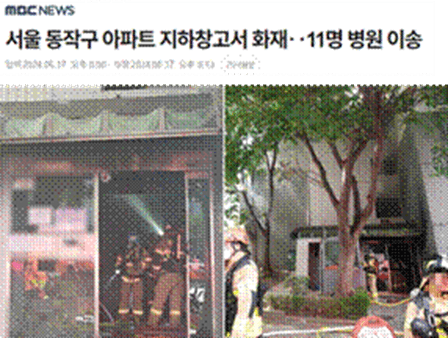
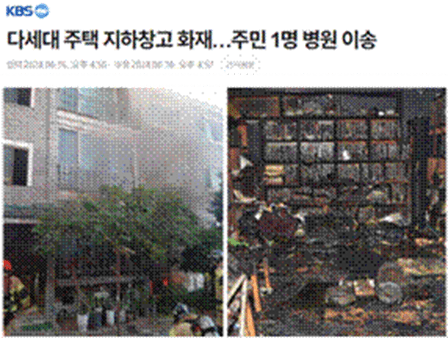
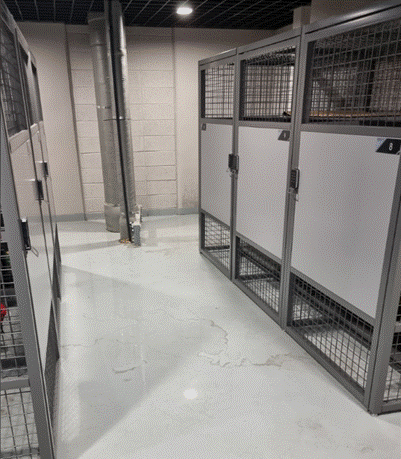
However, the problem is that after installation, these spaces are virtually left abandoned without any management entity. In most complexes, only grid-type mesh wire fences are placed in public basement spaces without even the minimal safety devices, such as temperature/humidity control, ventilation, CCTV, access control, or fire response.
As a result, facilities intended for resident convenience are instead causing danger and inconvenience. Because there is no safety management entity for the storage facilities, fires have occurred due to flammable materials stored arbitrarily by some residents, frequently causing casualties and property damage.
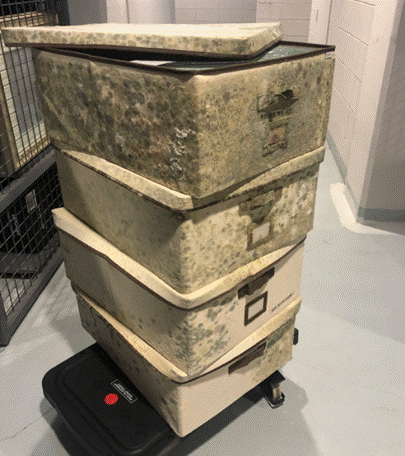
Not only that, but in a high-priced apartment complex in Seoul, there was a case where residents claimed damages from the construction company, stating that their stored items in the resident storage suffered damage from mold or pests. Since the management entity is unclear, conflicts among residents are repeated, and ultimately, the utilization rate is steadily declining.
<Cases of Leakage and Damaged Items in Apartment Resident Storage / Source: Second Syndrome>
Premium Self-Storage Replacing Traditional Resident Storage
The resident storage being prepared together by GS E&C and DaLock is a new level of premium self-storage that adds operational management functions and unprecedented value-added services to existing resident storage.
Based on technology and data accumulated through the operation of over 180 branches nationwide, DaLock implements a high-quality storage environment optimized for apartment complexes. Through automatic temperature and humidity monitoring, mobile app-based access control, 24-hour CCTV, and real-time sensor detection systems, the storage spaces within complexes can be transformed into the safest and most pleasant environments.
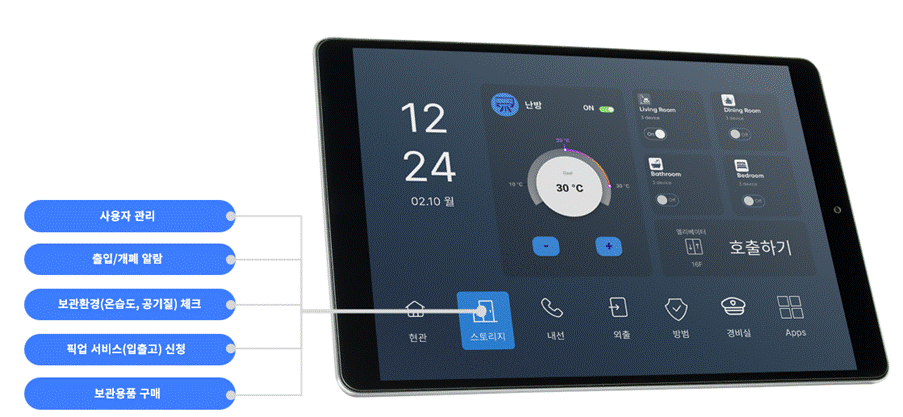
In addition, the dedicated mobile app will be integrated with Xi’s home IoT system, allowing residents to check the status of their storage unit in real-time and manage stored items from inside their homes. Various value-added services will be provided, such as a Digital Inventory function that automatically catalogs items when photographed, a courier integration service that allows items within the storage to be shipped immediately, and a secondhand trading function that enables easy item exchanges and sales among residents.
Furthermore, we are also reviewing the introduction of a concierge service that safely transports items from the front door to the storage, and a DaLock Cloud service that stores items requiring long-term storage in external DaLock hub warehouses.
DaLock goes beyond merely providing space, delivering the technology and operational capabilities that can evolve resident storage into a community platform connected to residents' lifestyles. Beyond simple storage, an innovation that smartly expands overall residential living will be realized.
<Storage Service Integrated with Home IoT / Source: Second Syndrome>
Serviced Storage, the New Standard for Apartment Communities
This agreement with GS E&C is not just the introduction of facilities, but the starting point for presenting a new standard of resident storage combined with operation.
Now, resident storage is not just a simple auxiliary space. It is an operational asset directly connected to the lives of residents and one that affects the trust and sustainability of apartment brands. A single resident storage unit can change the premium image of a complex, which directly translates to pre-sale competitiveness and real-living satisfaction.
Going forward, DaLock will create innovative cases of transforming resident storage into operable spaces. And this trend will be able to spread beyond complex-type apartments to senior housing, service residences, and urban residential properties in general.


