insight

Hong Woo-tae, the representative of DaLock
In the previous article, we looked at the growth potential and direction of the domestic market at a broad level. The gist was that, rather than developing from the start into large-scale facilities like in the United States or Europe, it is more likely to develop in a mixed form like Japan, with franchises, remodeling, and small- to mid-sized projects.
Of course, as the market matures, large-scale developments will also emerge, and the urban core and surrounding areas are expected to be densely filled in. When gauging market growth, a macroeconomic perspective is important, but it also seems very meaningful to examine users’ actual needs and behaviors at a micro level. Today’s topic is to look at how Mini Storage Darak users are using Darak and consider how self-storage will develop going forward.
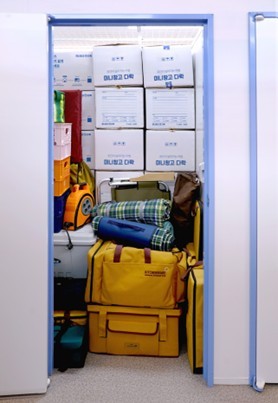
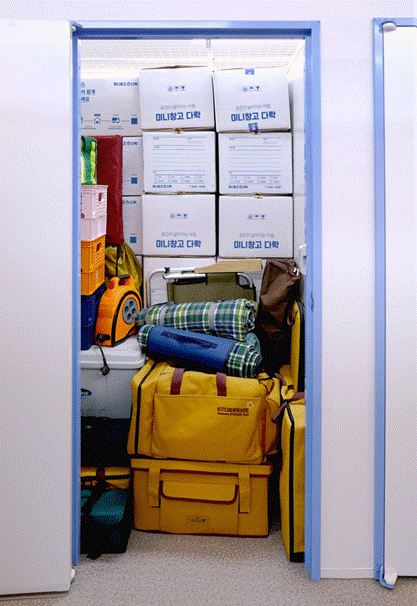
<Mini Storage Darak usage / Source: Second Syndrome>
In Korea, self-storage is an essential item for one-person households
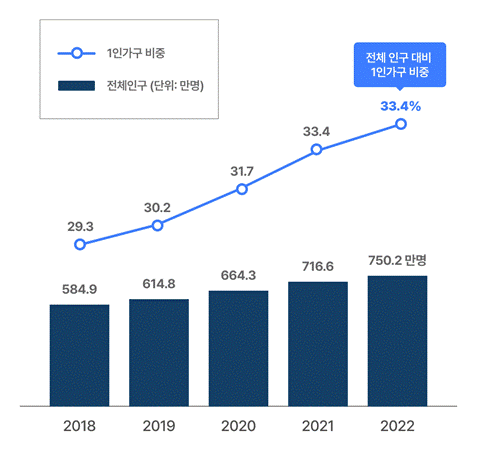
When analyzing Darak users by household size, single-person households had the highest share. That ratio was also 46%, higher than the national average of 34.5% (based on Statistics Korea’s 2022 figures), suggesting that the housing lives of one-person households are deeply connected to self-storage.
First, according to the Ministry of Land, Infrastructure and Transport’s Housing Survey, more than 70% of one-person households live in small homes of 60 m2 or less. In addition, due to recent government real estate policies and high interest rates, the supply of non-apartment housing such as multi-family homes and officetels, which were built for one-person households, is decreasing.
According to Real Estate 114, the number of officetel units scheduled for sale nationwide this year is 6,907, only 42.3% of last year’s supply of 16,344 units. In other words, one-person households are living in relatively small homes, and their housing options are continuing to shrink.
<Nationwide officetel sales and move-in volumes / Source: Real Estate 114>

Also, compared with other countries, the share of people who move homes is high in Korea, and this tendency is even more pronounced among one-person households. This is especially true for relatively young one-person households that are not moving for reasons such as children’s education or stable retirement living. According to a survey by the Korea Research Institute for Human Settlements, young single-person households aged 20 to 34 move once every 1 year and 3 months.
Frequent moving inevitably creates a period mismatch problem when moving dates do not line up. In fact, short-term storage of moving belongings among users in their 20s accounts for 38% of Mini Storage Darak’s usage purposes, which is higher than those in their 30s (30%) and 40s (21%), indicating significant demand driven by moving. Also, when people move, their homes may become smaller (downsizing) or the internal storage layout may change, creating situations where self-storage becomes necessary.
<Share of one-person households in Korea and Darak user ratio by household size / Source: Statistics Korea, Second Syndrome>
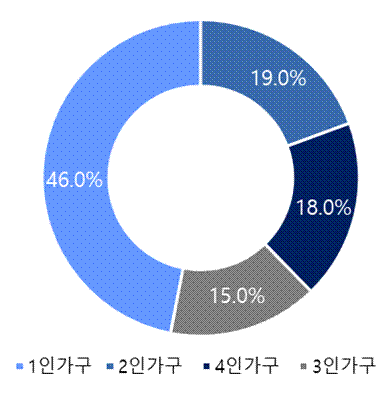
Of course, households with more than one member account for 54%, so it is certainly not only one-person households that use Darak. Still, the share of one-person households will gradually rise, and housing instability will always exist, so self-storage clearly seems to be a useful item for one-person households.
Self-storage is closely related to multi-family housing
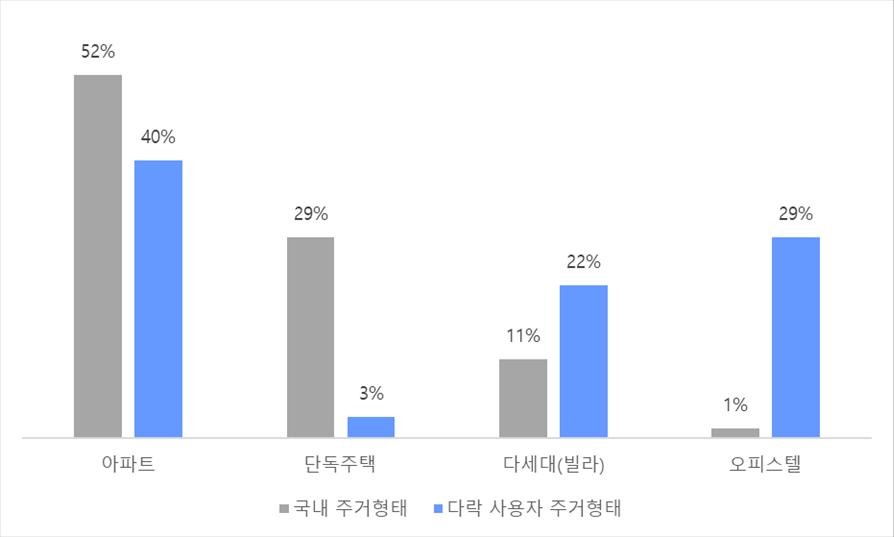
Users’ housing types are apartments (40%), officetels (29%), and multi-family homes (22%) in that order, with detached houses accounting for a very small share (3%). Compared with Korea’s housing-type ratios (apartments 52.4%, officetels 1.4%, multi-family homes 11.4%, detached houses 29.0%), the higher share of officetel users, which are widely used by one-person households, stands out, as does the higher utilization in multi-family housing rather than detached houses.
We have already seen that one-person households make heavy use of it, but why is the usage rate higher in multi-family housing than in detached houses? After all, physically changing the housing space is not possible in either detached or multi-family homes.
<Domestic housing-type ratios and Darak users’ housing-type ratios / Source: Statistics Korea, Second Syndrome>
It could be said that detached houses generally have more floor space than multi-family housing, but that likely depends on the case. The biggest difference between the two types seems to be the presence of private and shared spaces. In multi-family housing, people may place small belongings outside their doors, but if they block passageways or use a corner of the underground parking lot, residents will immediately file complaints. That is because shared spaces cannot be exclusively used by a specific person.
In other words, multi-family housing has almost no flexibility to expand living space. In contrast, detached houses have quite a few subtly hidden spaces. Because areas such as under the stairs, parking spaces, yards, and rooftops can be freely used as storage areas, some degree of space creation(?) is possible.
Of course, as consumers accumulate more items, detached houses can also run out of space, and they will not be free from moving-related issues. But for now, it seems that a lot of self-storage demand is generated in multi-family housing, where private space is limited.
What matters is how conveniently I can use it
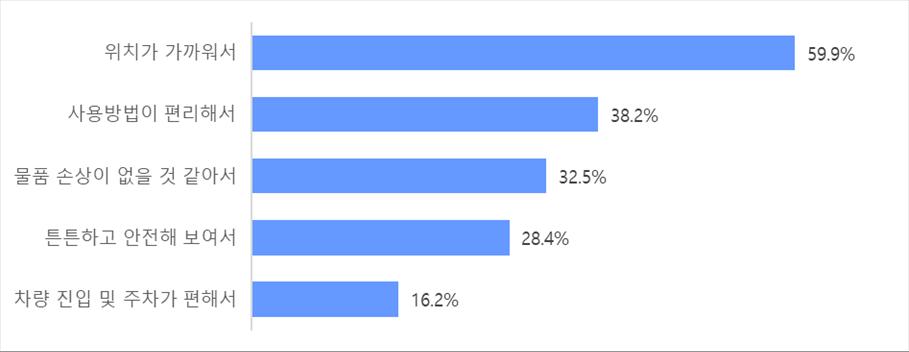
When it comes to users’ criteria for choosing self-storage, convenience is foremost. Convenience includes both accessibility—being located where I want it—and ease of use, meaning the usage method is convenient.
Here, accessibility is almost synonymous with being close, but what it is close to differs by user. In other words, it may be close to the home where they live, or close to the workplace where they commute. For users, what matters is whether it is located along their usual route of movement. That is why, in terms of location, there is currently no major difference in demand between residential and commercial areas, and demand forms along the main routes users travel.
However, this applies when periodic use is assumed. In the case of purposes like moving-storage, which do not require interim visits at all, sensitivity to the storage environment is higher than accessibility.
<Reasons for choosing Mini Storage Darak (multiple responses) / Source: Second Syndrome>
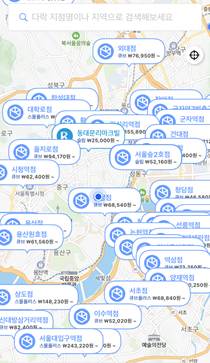
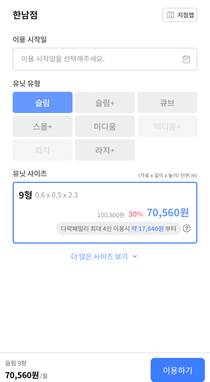
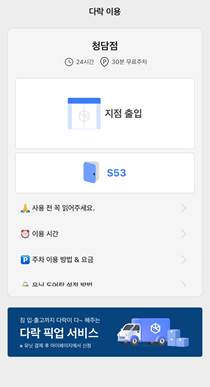
Regarding the convenience of the usage method, it seems that Mini Storage Darak, which is based on ICT technology, is appealing because it creates many user experiences that differentiate it from other self-storage services. Examples include 24-hour contactless use via a mobile app, automated integration between online and offline systems, and UI/UX that makes it easy to find the storage unit you want on the web.
In today’s world, online and mobile environments are the default, so even services that deliver value offline must allow all order-related tasks to be completed online.
In particular, statistics show that about 35.6% of MZ generation consumers experience call phobia—feeling tension, anxiety, and fear during phone calls (a survey of 1,496 MZ-generation respondents by Alba Heaven). So the younger the user, the more important this kind of mobile-app-based user experience will be. If even phone calls are intimidating, face-to-face interaction may feel even more uncomfortable.
Considering that one characteristic of self-storage use is that users store private belongings, contactless use through an online environment also appears to be an important factor.
<Mini Storage Darak mobile interface / Source: Second Syndrome>

Finally, security and storage conditions are also important considerations. Since it is natural that items must be stored safely from the risk of theft, most services use both in-house security and third-party security from specialized providers.
The area where companies differ is environmental management. The possibility of damage to items caused by various leaks in buildings and by changes in temperature and humidity can only be properly managed when there is a systematic analysis of the building, physical countermeasures using hardware, prevention through operational know-how, and customized insurance products. Currently in Korea, there is a very large gap between companies in this area.
This can be seen as a phenomenon that appears when market participants accelerate their entry into an early-stage market without appropriate operating standards in place. Since the Ministry of Land, Infrastructure and Transport and other government departments have expressed their intention to foster the self-storage industry, we hope that a system that can nurture the industry in a healthy way, such as self-regulation, will take root.
Self-storage reflects changing lifestyles
As Mini Storage Darak has the largest number of self-storage users in Korea, there is a question it hears often: what on earth are people storing? But from an operator’s perspective, the items stored are so diverse that tracking what is stored the most is not very insightful. More important is why users need Mini Storage Darak.
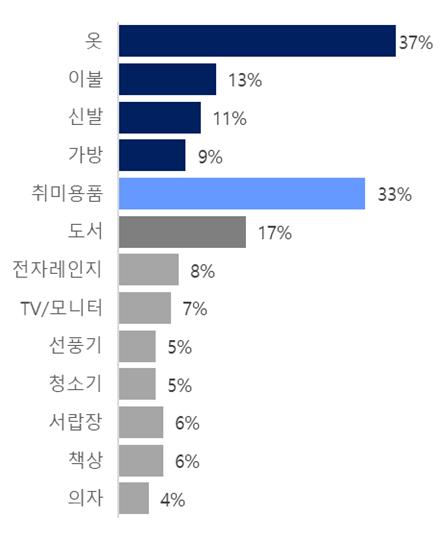
Let’s look at the statistics on stored items. Because of our climate with four distinct seasons, seasonal clothing fills up home closets, so we need “another closet.” Clothing is one of the most commonly stored items. Hobby items are so diverse that they had to be grouped into one category, and beyond the easily imagined camping, golf, skiing, model kits, and toys, there are many more detailed hobbies.
Just off the top of my head from what I’ve seen, there are countless cases: customers storing only various tea bags, customers storing only their own ink wash paintings, customers collecting only baseball bats, and fan clubs storing only idol merchandise.
The reason stored items are so diverse is simple. Darak provides space and storage services, and there are far too many types of items that need them. So the item category itself does not give us much insight.
<Mini Storage Darak usage purposes and stored items / Source: Second Syndrome>
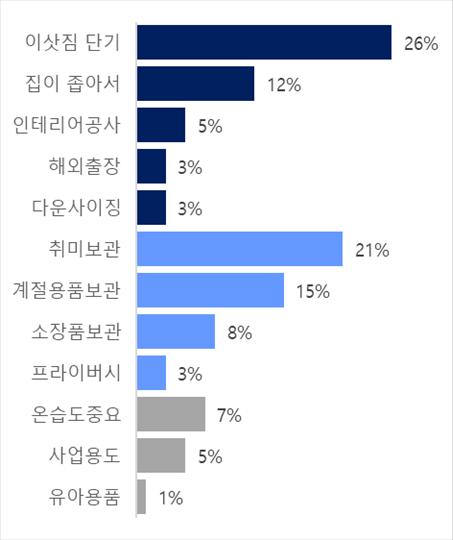
Looking at usage purposes is a somewhat better approach. But here, too, we need to look at the hidden meaning. The high level of short-term moving storage stems from the demographic change of an increase in one-person households, as mentioned above. The fact that people live in cramped spaces but cannot move immediately is related to Korea’s housing culture shaped by the monthly rent and deposit system and school districts, and it can be interpreted as a growing desire to improve living space as income rises.
The same interpretation applies to storing seasonal items. The goal is to use living space more efficiently by moving unused items out of the home. Storage for hobbies or collections means that, as income levels rise and society changes, individuals engage in a much wider variety of hobbies than before, and the minimum resources needed for them—namely, space—are increasingly necessary.
So, returning to the original question, if someone asks what people are storing so much in Mini Storage Darak, I would answer: “They are storing their lifestyles.” We now have more one-person households than at any time in the past, more people raising pets, and more diverse hobbies than ever before.
A great deal of individuality has been added to people’s lives. Before BTS and ARMY appeared, merchandise and fandom businesses were not as active as they are now. The existence of omakase restaurants and luxury hotels for dogs is also a change that did not exist in the past. Even buying a cool watermelon in summer and shopping online have now become completely normal.
Mini Storage Darak stores all of these changes within its spaces. More than 50% of customers at the Darak Sangam DMC branch next to Nanjicheon Camping Ground are camping experts. At the Darak Gangnam Station branch, you can often see people running e-commerce businesses as a side job packing goods.
We can’t name names, but because of the huge number of CDs stored by fan clubs, we also learned that CDs are still selling well even in today’s digital-music era. And if you combined all the figurines and Lego stored across Darak locations nationwide, you might even be able to hold an exhibition at COEX.
Some investors sometimes say, “Is there really demand for that? I don’t think I’d ever use it.” For people whose lifestyles are stuck in the past and who think fruit should be bought by seeing it in person at the market, self-storage probably won’t be something they ever use either. The target customers for self-storage in Korea today are those who quickly embrace changing lifestyles.
So far, we have looked more microscopically at the self-storage usage process by examining the user experience of Mini Storage Darak, which represents Korea’s self-storage market. However, not all self-storage services have the same user experience or level of technology. In addition, this is no longer just a simple real estate industry that began in the 1960s; what has become important is how technology can be applied to space to create value such as monetizing idle space and unmanned operations.
In the next article, we will introduce the current state of technology adoption in global self-storage services and the automation technology of Darak, the tech-driven self-storage service.


