insight

Hong Woo-tae, the representative of DaLock
In the last article, we took a microscopic look at the user experience of Mini-Warehouse DaLock, the leading self-storage operator in Korea. This time, we would like to take a look at how self-storage, which began in the 1960s, is changing in the global environment and what the current level of technology adoption is.
It would be great to gauge whether self-storage will remain a traditional brick-and-mortar or mom-and-pop business, or if it will contribute to a paradigm shift in the real estate market through technology adoption.
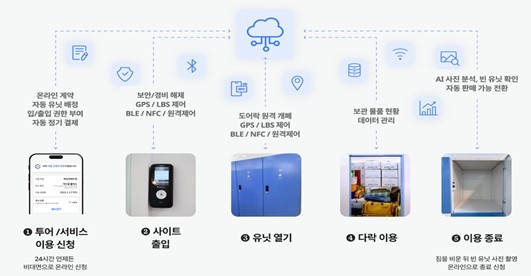
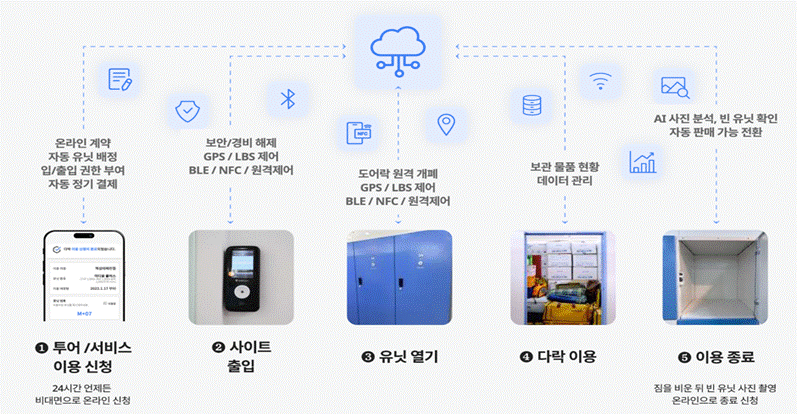
<Mini-Warehouse DaLock mobile linkage technology / Source: Second Syndrome>
Mom-and-pop Business?
As mentioned in the second article, [Where is the Korean self-storage market passing through?], traditional self-storage is a business based on land and buildings, which is real estate.
A typical case is when a real estate development company with capital power carries out large-scale real estate development. Or, like Korean retirees who once opened chicken shops with their retirement funds, there are retirees who open facilities in the suburbs for their post-retirement life with money saved when they were young. Therefore, rather than applying technology represented by digital, it was natural to be based offline and be valued by the value of land or buildings.
Did you know that self-storage occasionally appears in Hollywood blockbuster movies? In the beginning of Avengers: Endgame, Ant-Man finds an important clue to retrieve the vanished heroes inside a self-storage unit, which was portrayed as a dusty, old image (this is U-STORE-IT, one of the large self-storage facilities in the US). If you look closely at the movie, you can tell that the self-storage in the background felt like an abandoned, old warehouse.
<Self-storage in the movie / Source: Avengers: Endgame>

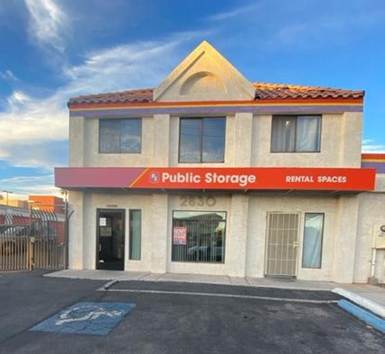
I was curious, so I went to visit in person. Just like Japan, I wanted to go to the US, the home of self-storage, and see what it looks like with my own eyes. While visiting a tech conference held in Las Vegas, I took some time to visit nearby self-storage facilities. I searched for Public Storage, the world's number one in market capitalization, and since there were more than 10 facilities in Las Vegas alone, I visited the one in the Winchester area.
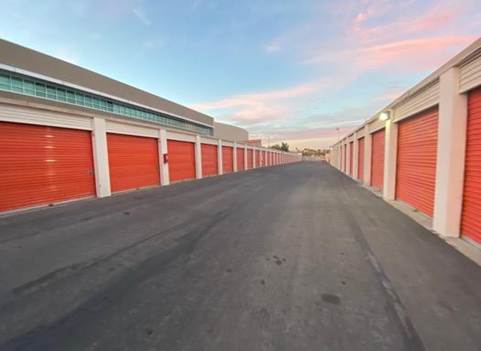
It was a typical suburban American self-storage facility, and was a single-story outdoor style. First of all, what happened as soon as I went there was that I couldn't go inside because the manager had gone to have lunch. Along with another lady who had come at the wrong time like us, we were able to meet the manager after lunchtime, and we had to submit a copy of our ID to use the facility. It felt like a Korean government office.
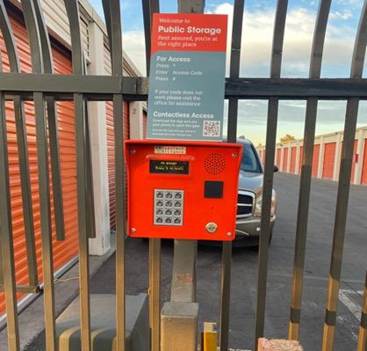
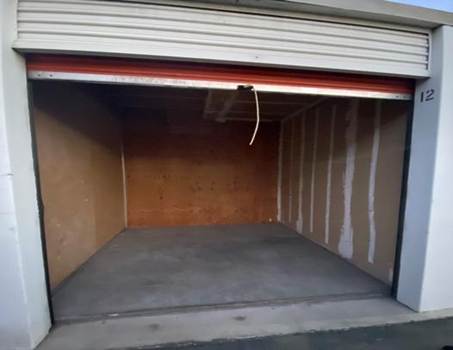
What was even more surprising was that despite being a hot desert area, most of the rooms did not have air conditioning! Not only that, but for locking devices, we had to purchase a small padlock separately, and the price of such a room of about 2m x 3m was about 120,000 KRW per month. The only trace of technology that could be found was a vehicle gate that opened when a pre-arranged access code was pressed when a vehicle entered.
<Public Storage in Las Vegas, Nevada, USA / Source: Second Syndrome>
Digitalization efforts by large companies with capital
As introduced in a previous article, Public Storage (PSA) is a large company with annual sales exceeding 3 trillion KRW and operates more than 3,300 facilities. If its market capitalization were transferred to South Korea's KOSPI, it is a company that could rank in the top 5. The fact that even a facility of such a huge company is operated conventionally allowed us to realize two things. One was that the demand for self-storage was high enough to endure the inconvenience of the analog method, and the other was that the long history of the United States was actually hindering digitalization.
That makes sense, because even by conservative estimates, there are probably more than 300 units per facility across 3,300 facilities, so capitalizing all of these at once would entail enormous costs. While Mini-Warehouse DaLock targeted the linkage of offline and online as its basic concept from 2016, facilities in the US, which started in the 1960s, now face the difficult task of digital conversion.
Since it is such a huge company, one might argue that it would be better to just hire people like in Las Vegas. However, according to Public Storage's data for 2023, the total number of employees is 6,200. This means that about 1.9 people are employed per facility. On the other hand, the number of Mini-Warehouse DaLock sites is currently 112 nationwide, and the total number of employees is 38, so 0.34 people per facility operate the whole network.
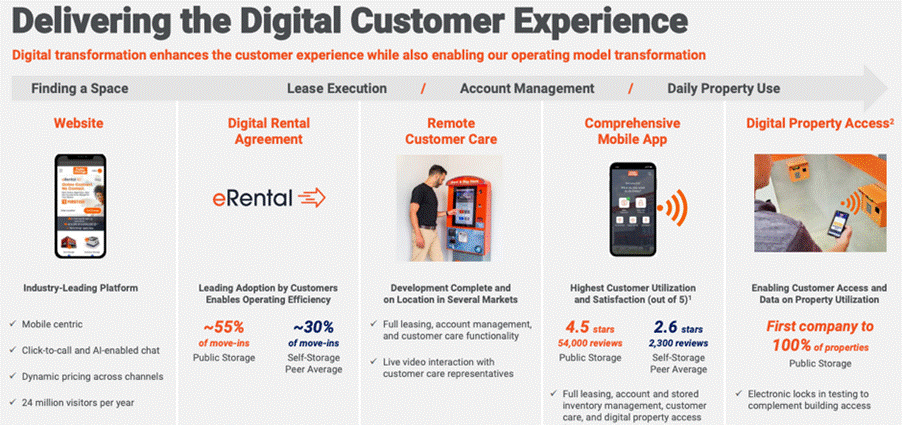
What widens the gap even further is that while Public Storage has 5,380 employees to operate its facilities, DaLock, which has automated technology, currently has only 2 employees. Even taking into account the difference in the number of facilities, you can see how much automation technology can streamline operations. And decisively, Public Storage also truly wants to digitalize. A word that never fails to appear in the annual reports published by this company every year is 'digitalization'.
If Public Storage adopts Mini-Warehouse DaLock's technology, it would be able to save about 85% of labor costs, so there seems to be no reason to decline such technology. Although slow, it is actually observed that they are moving towards digitalization little by little as they have plenty of capital.
<Excerpt from Public Storage Annual Report / Source: Public Storage>
What if real estate-based self-storage and technology are combined?
Let's look at a slightly different case. It is Life Storage, the third-place company that also started from a real estate perspective like Public Storage but did not hesitate to adopt technology (currently, this company has been acquired by the second-place company, Extra Space). Life Storage seemed to be more sincere about combining self-storage with technology than any other operator. Large self-storage companies like Life Storage operate vehicles most of the time for transport, and they focused on the potential of inventory storage for businesses as well as providing infrastructure for individuals such as storage and transport.
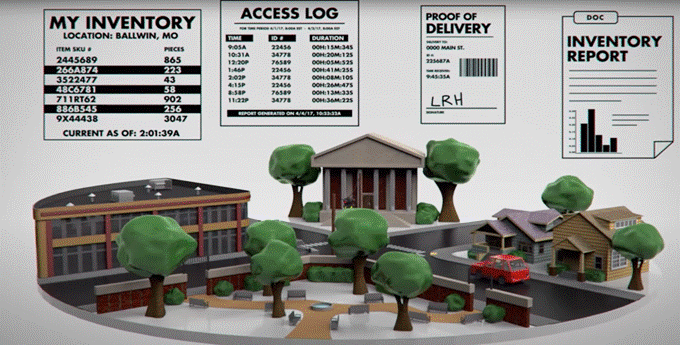
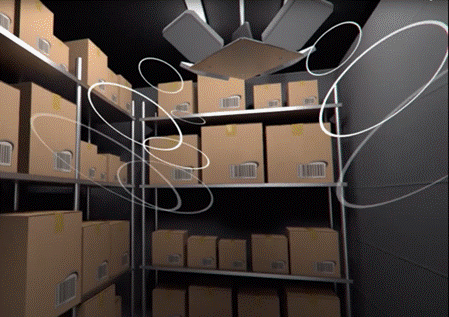
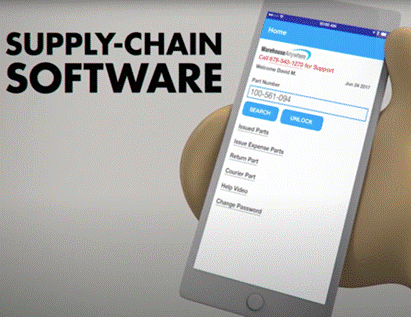
Because the US has such a vast landmass, even when early morning delivery was being established in Korea, there was a time when Amazon Prime, which promised delivery within 2 days, was a major surprise. If so, in the split-second world of retail sales, how can we solve the problem when goods are needed faster than 2 days? Wouldn't it be possible if distributed inventory is stockpiled throughout the wide land? This is probably what Life Storage had in mind. This is because the self-storage operator created a warehouse management solution (WMS) and applied an RFID system to provide inventory management services while also conducting last-mile transport.
<Life Storage Warehouse Management System / Source: Life Storage>
The fact that inventory could be managed just by picking up items from a self-storage unit blew a fresh breeze through the industry at the time. They were so active in tech investments that they introduced themselves as a


